Kaziranga is, before it is anything else, a floodplain. It is a stretch of the Brahmaputra's southern bank. Here the river's annual flood makes and remakes a mosaic of tall grassland, wetland, and woodland. That mosaic supports one of the densest concentrations of large mammals on earth. It is a UNESCO World Heritage Site and a tiger reserve. It is also the home of the world's largest population of the greater one-horned rhinoceros.
The floodplain and its flood
The park lies on the alluvial plain of the Brahmaputra, in the Golaghat and Nagaon districts, with additions extending toward the Karbi Anglong hills to the south. It is a landscape of three interlocking habitats: vast tracts of tall “elephant” grassland, the numerous beels (oxbow lakes and marshes) that hold water through the year, and patches of semi-evergreen and riverine woodland. This combination of open grazing, permanent water, and cover is packed into a relatively small area, and it is what lets Kaziranga carry the animal densities it does.
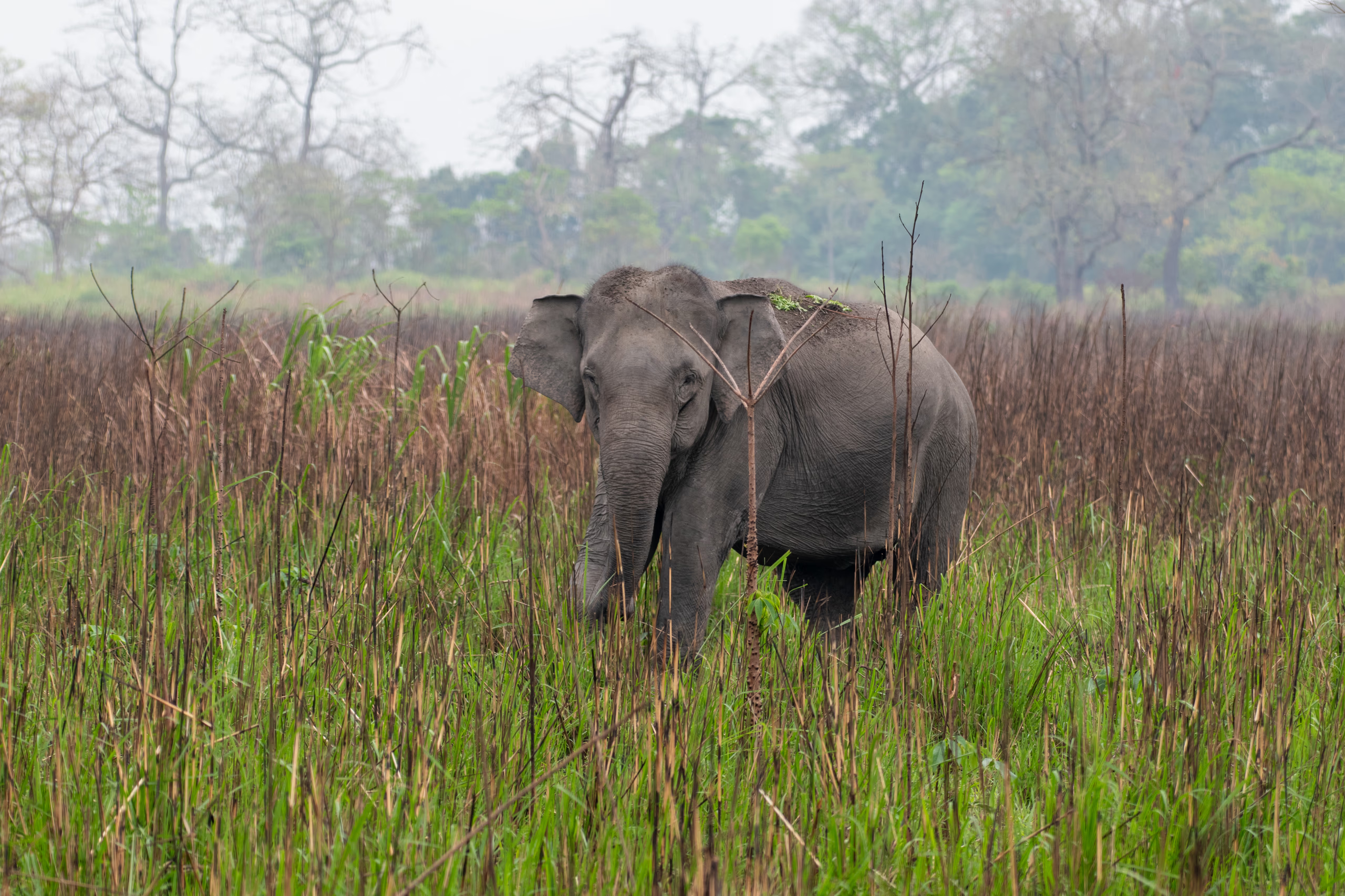
What renews the mosaic is the annual monsoon flood, the central ecological fact of the park rather than an interruption of it. Each year the Brahmaputra spills across the plain, depositing the silt that keeps the grassland fertile and resetting plant succession before any one habitat can take over. The same rising water drives the animals onto higher ground, including the Karbi Anglong highlands across the southern boundary, so the corridor south is not a scenic luxury but a lifeline the herds depend on. Yet the flood is also a periodic catastrophe: it drowns animals and pushes them across the highway into traffic. The force that makes the habitat is the same one that, in the worst years, threatens everything living in it.
The rhino and the flagship species
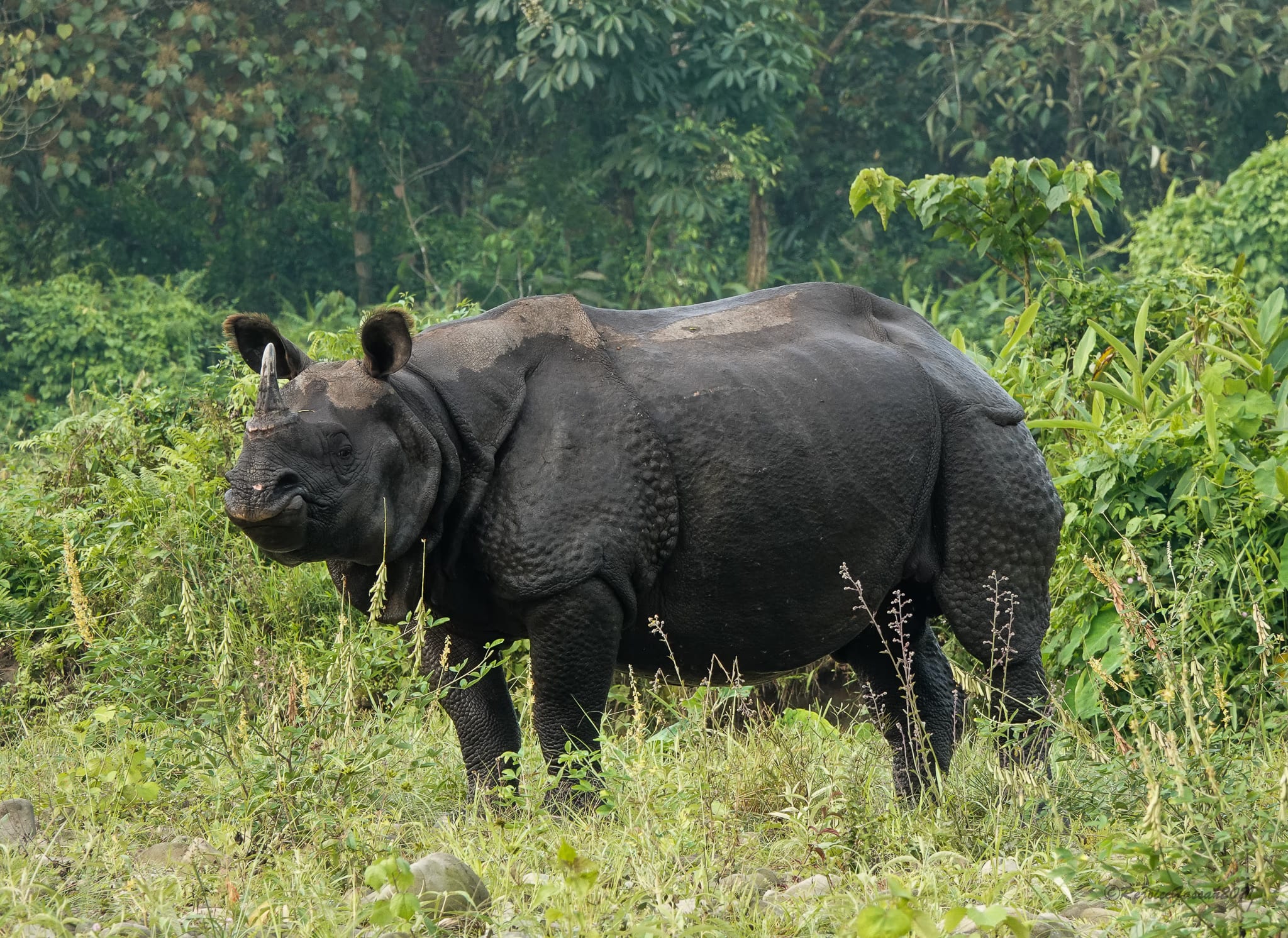
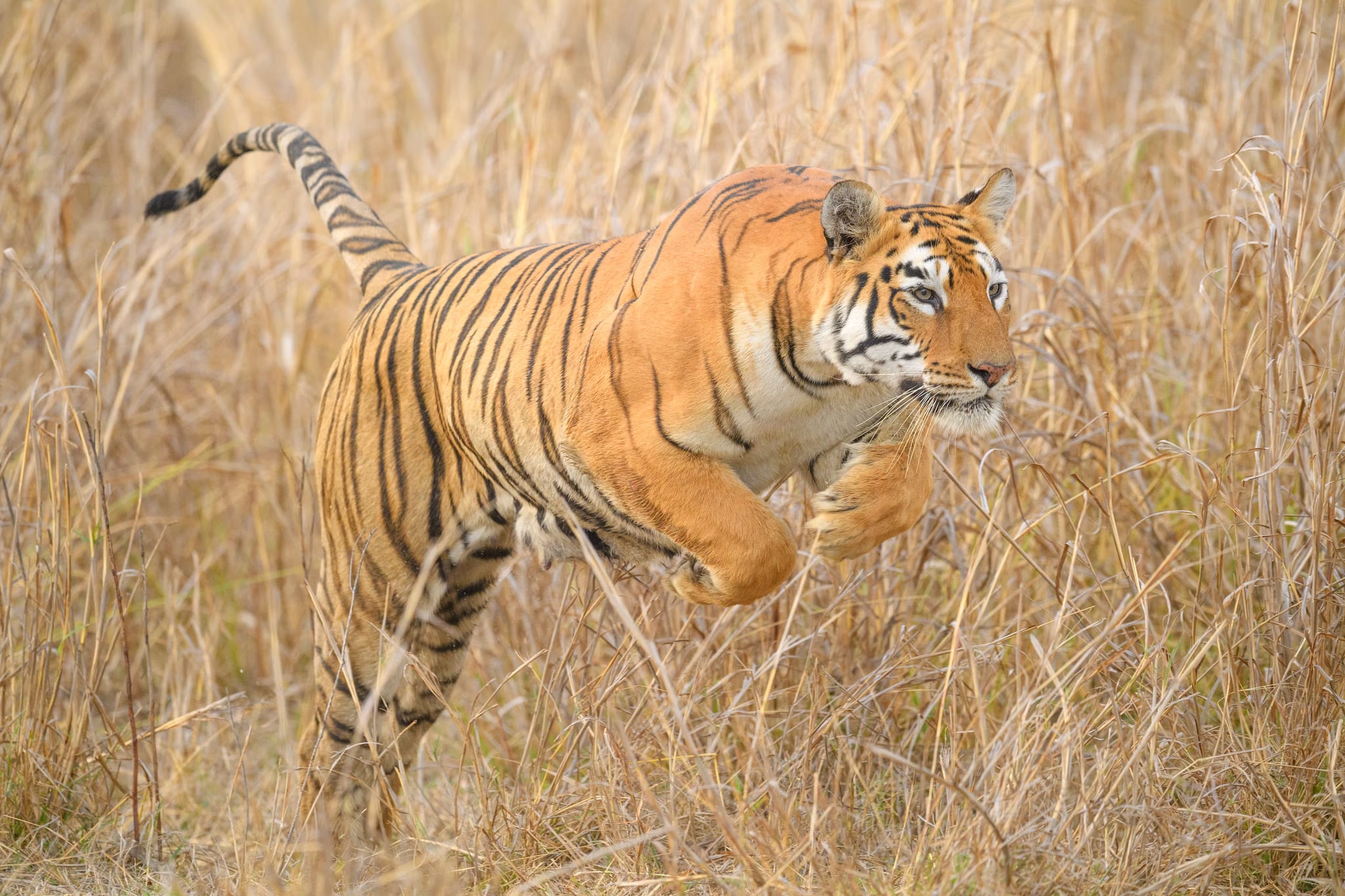
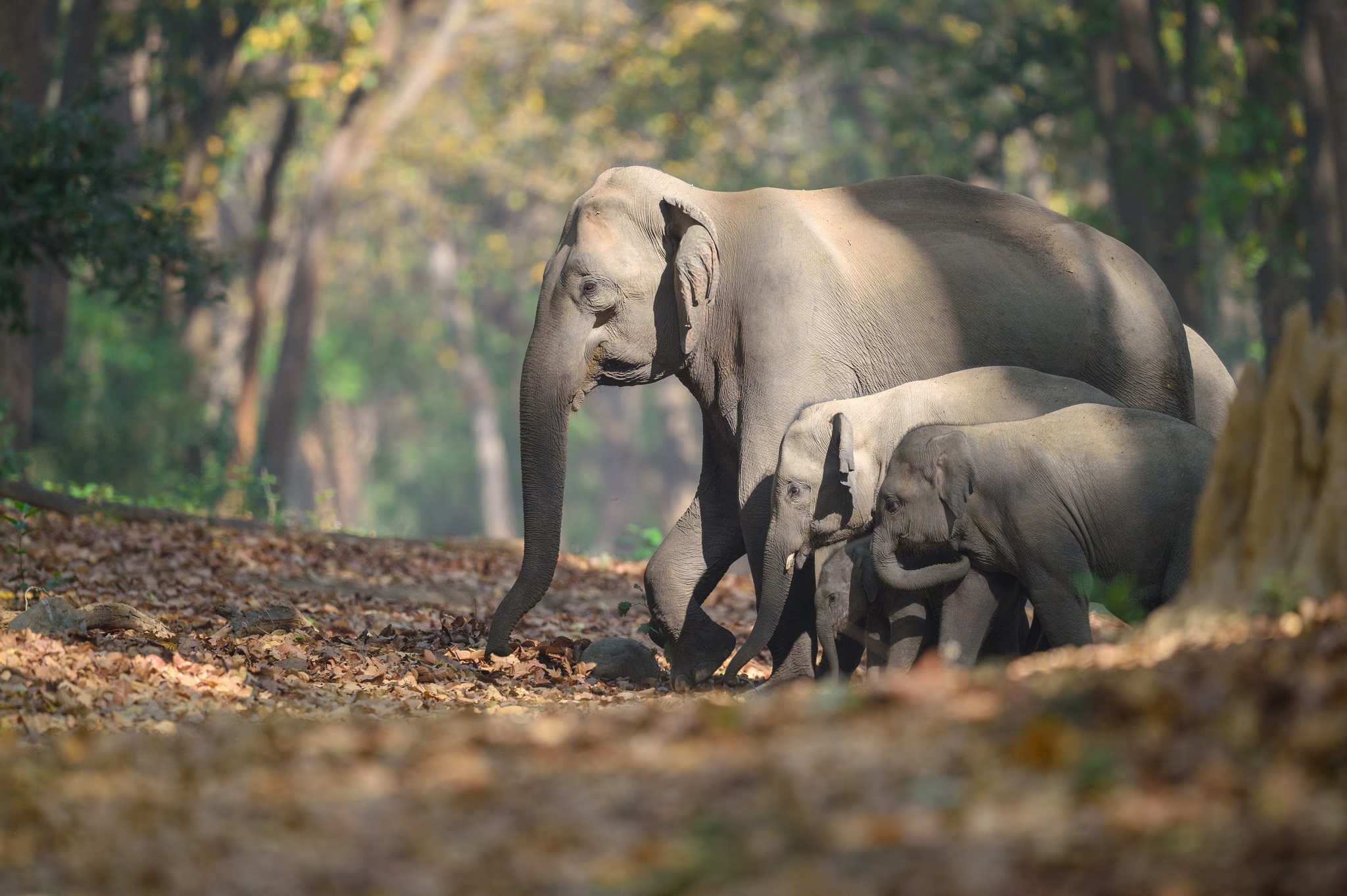
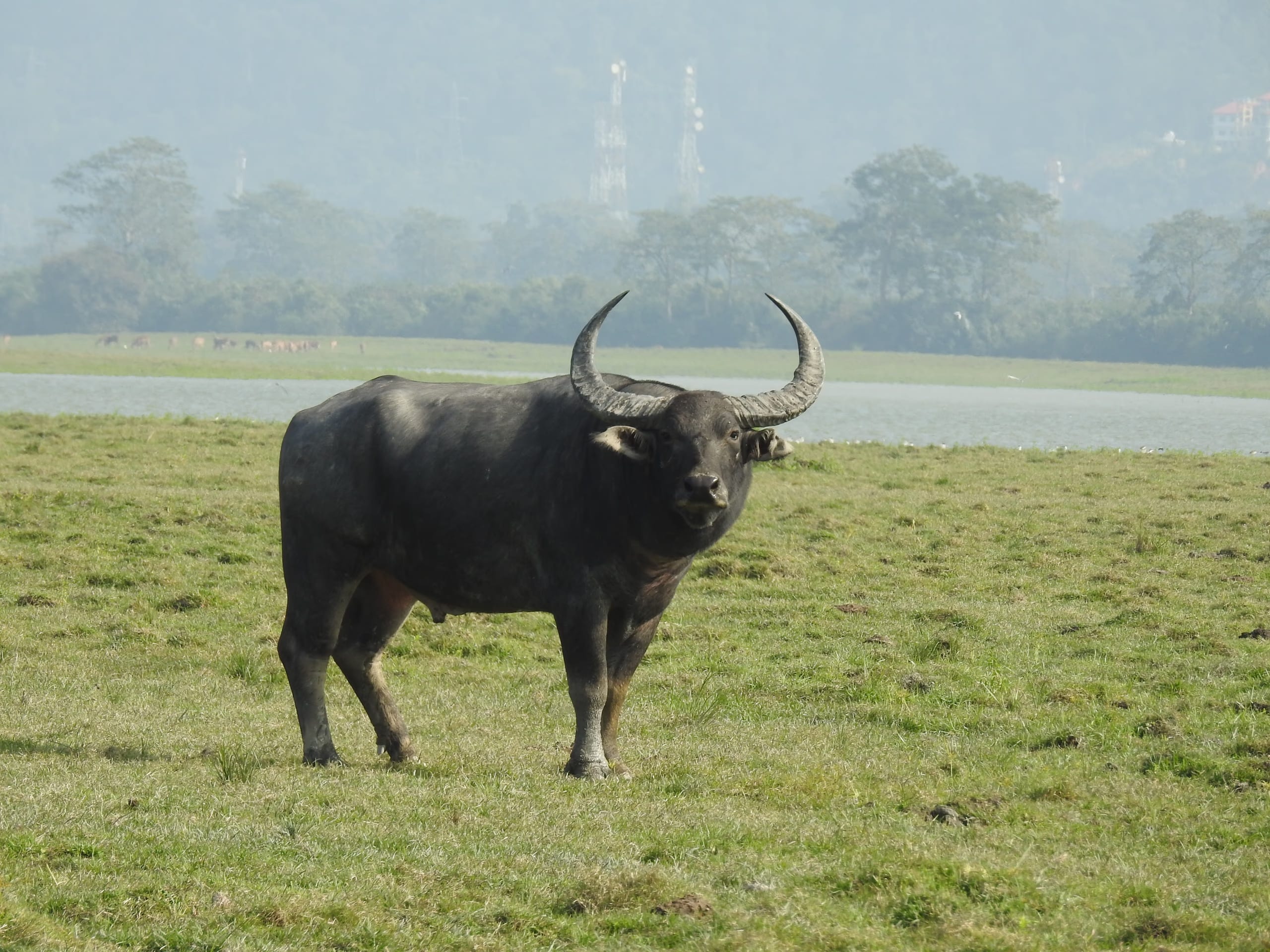
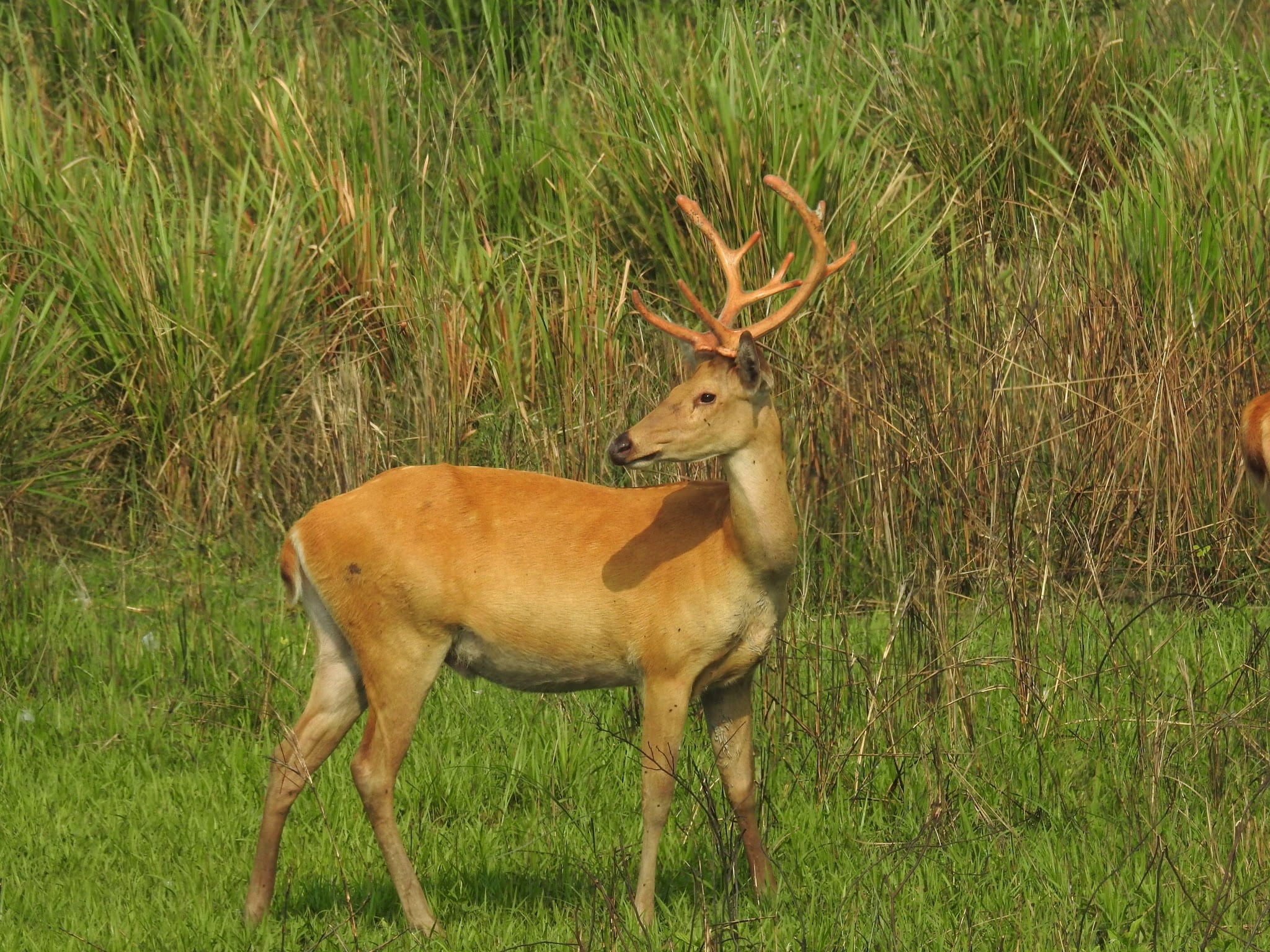
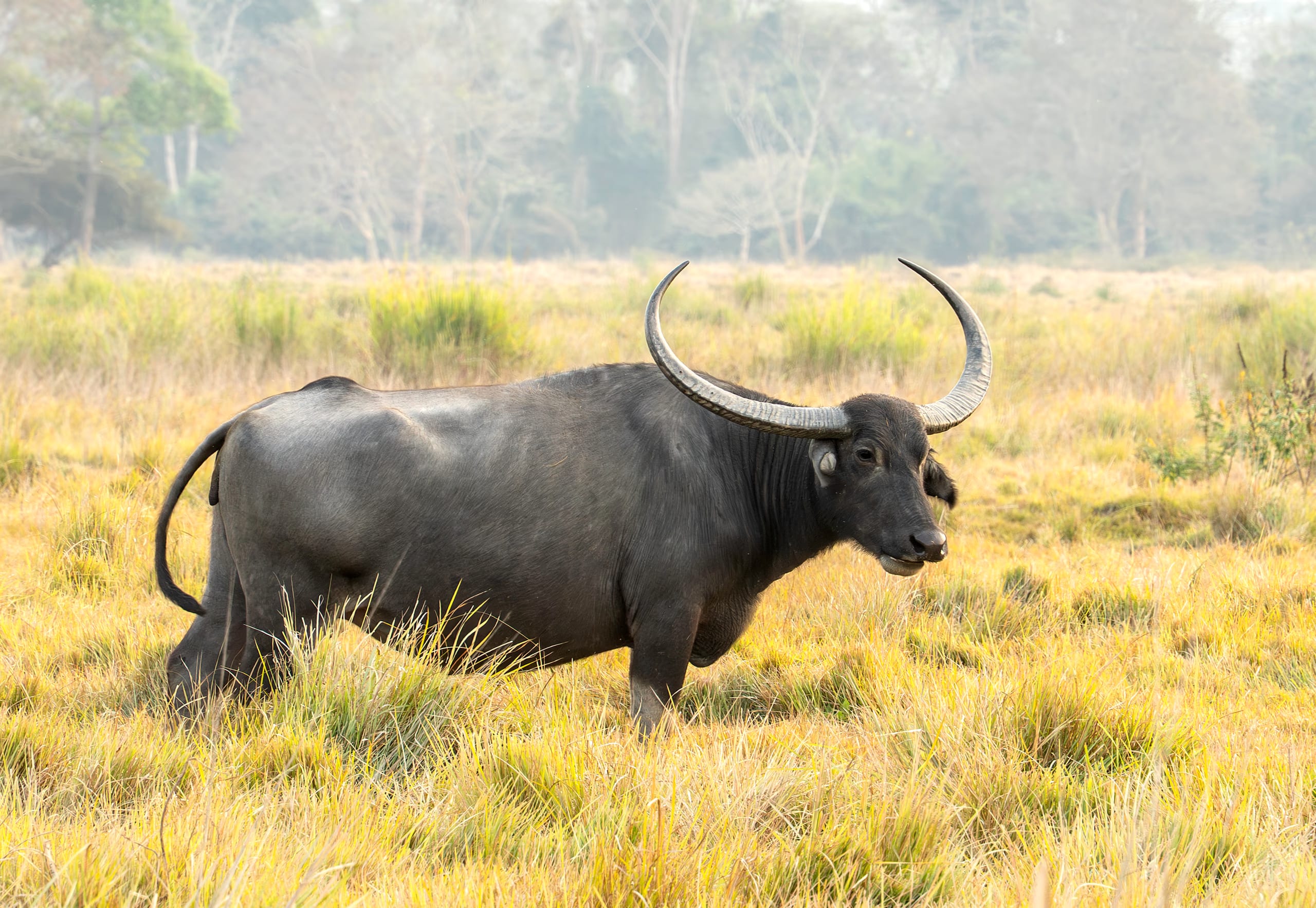
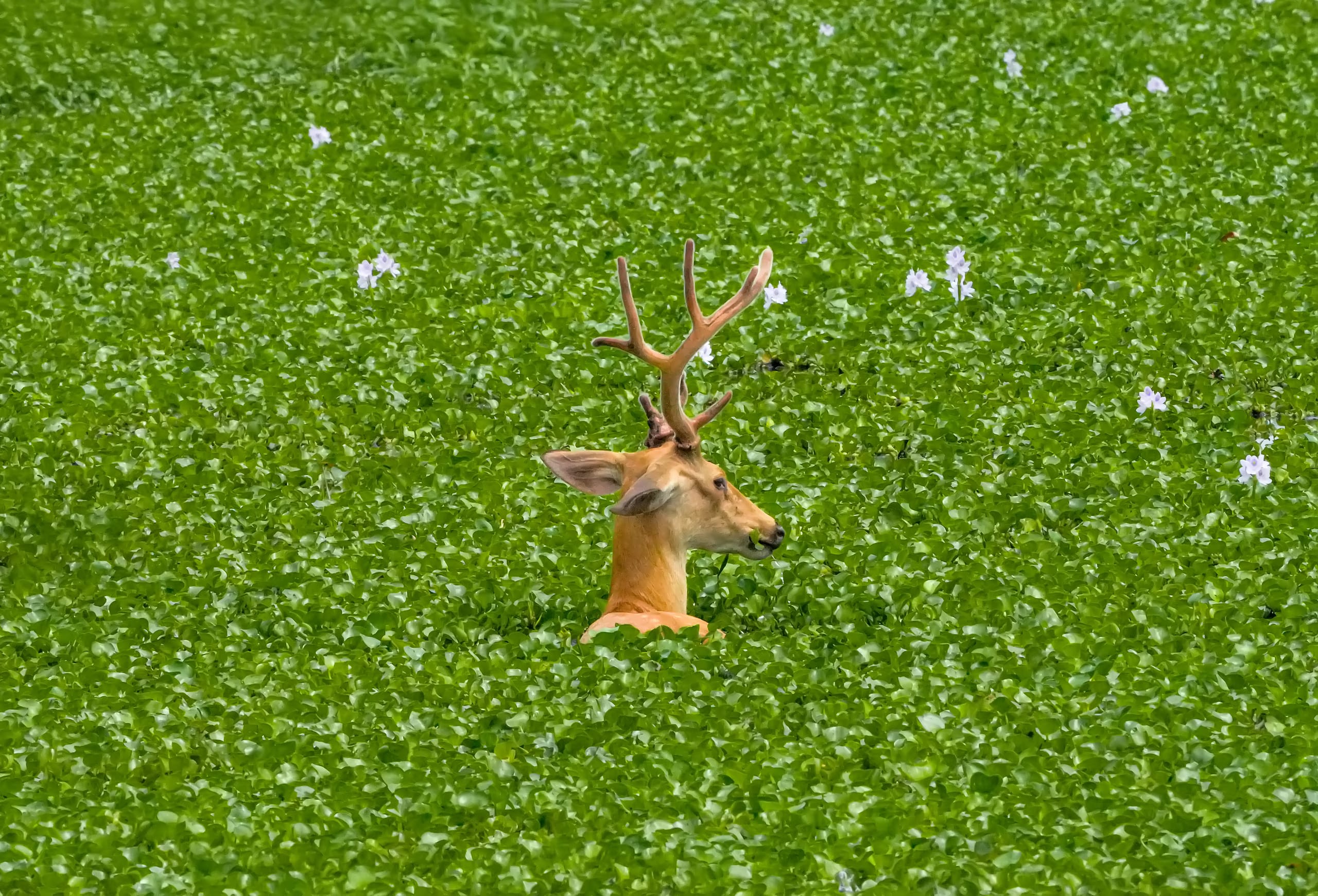
Kaziranga is, above all, rhino country. It holds by far the largest population of the greater one-horned rhinoceros in the world, well over two-thirds of the species' surviving wild total at this single site. It also holds the largest population of true wild water buffalo anywhere, on the order of fifty-seven percent of the world's wild buffalo, massive and dangerous animals whose horns sweep wider than a person is tall. It has the eastern swamp deer, the dolhorina (whose overwhelming majority survives here, with a small population also at Manas), resident elephant herds, and one of the highest tiger densities anywhere. These five, the rhinoceros, the tiger, the elephant, the wild water buffalo and the swamp deer, are celebrated together as the Big Five of Kaziranga. It is for this assemblage of threatened large mammals, sustained by the floodplain, that the park is internationally significant. The species, with their conservation status and links to the IUCN Red List, are catalogued in the searchable list below.
From reserve to World Heritage Site
The conservation history begins in the colonial period. In the conventional founding story, Mary Curzon, wife of the Viceroy Lord Curzon, travelled to Assam in 1904 to see rhino and found none, and her concern, conveyed to her husband, helped prompt the forest administration to act. The Kaziranga Proposed Reserve Forest was notified in 1905, considerably smaller than the present park. Reserve Forest status forbade hunting but built no real protection regime, and recovery began only after the upgrade to a Game Sanctuary in 1916.
“I have come back without seeing one. It seems they are not to be found here either. Something must be done.”
From there the park was re-statused step by step as the law itself changed, each stage adding administrative force. Arupjyoti Saikia sets this trajectory within the wider forest and ecological history of Assam. It became a Wildlife Sanctuary in 1950 and gained full National Park status under the Assam National Park Act, 1968, formally notified on 11 February 1974. It was inscribed on the UNESCO World Heritage List in 1985, for its ecological processes and its habitats of threatened species, and declared a Tiger Reserve in 2006-07, part of the wider conservation turn in the state's recent history.
A century of recovery, and its limits
The rhino censuses tell the institutional story in a single column. At the start of the twentieth century, there were an estimated 200 individuals across the northeast, and across the decades the Kaziranga population alone climbed to over 2,600 in the 2022 census. This is the headline conservation success of South Asia, and Kaziranga is where most of it was produced. Forest officers and naturalists such as P.D. Stracey and E.P. Gee, and the photographer Robin Banerjee, did much to make the rhino's cause legible to a wider public through their writing and images.
That success has not closed the story so much as raised the stakes of keeping it. Flooding has intensified, and the worst recent years have drowned rhinos, deer, and elephants in numbers that undo a season's gains. Poaching for rhino horn rises and falls in cycles rather than ending. And the buffer with the Karbi Anglong plateau, the high ground the animals depend on during the flood, is under steady development pressure from highway and infrastructure projects along the southern boundary, narrowing the very corridor the flood makes essential. The institutions that carried Kaziranga through one century are visibly under load as the second begins.
The four ranges
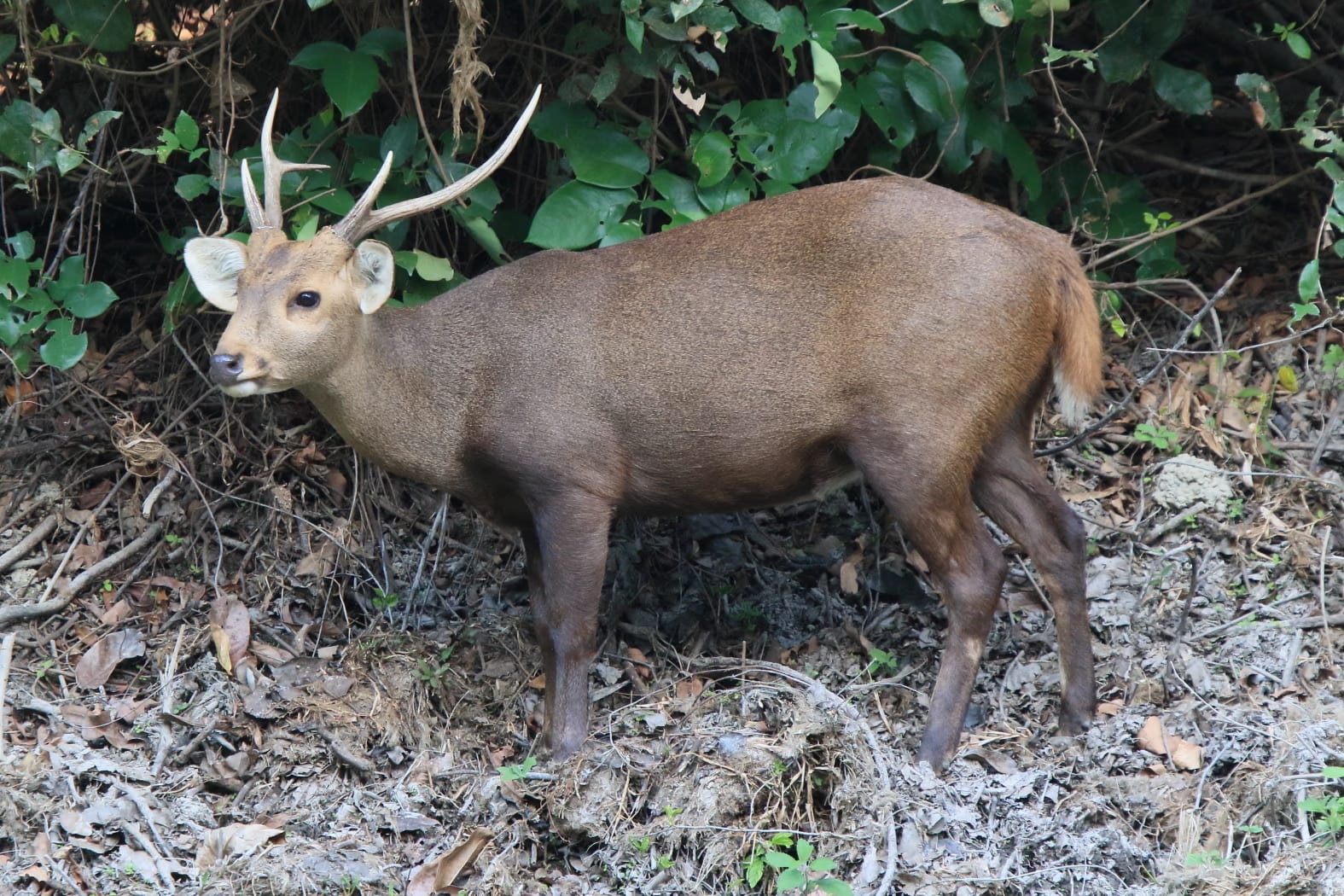
For the visitor, Kaziranga is not one place but four. The park is divided into tourism ranges. Each has its own gate, its own character of country, and its own likeliest sightings, and a serious visit takes in more than one. The Kohora or Central Range is entered from Mihimukh on the main highway. It is the busiest and the classic introduction: open grassland and beels close to the road, the surest rhino-watching anywhere, with elephant and, with luck, tiger. The Bagori or Western Range, a short way west, is the other great grassland circuit. It is wide and easy to scan, heavy with rhino and wild buffalo and crossed by large herds of hog deer. Many regard its early-morning light over the grass as the finest in the park.
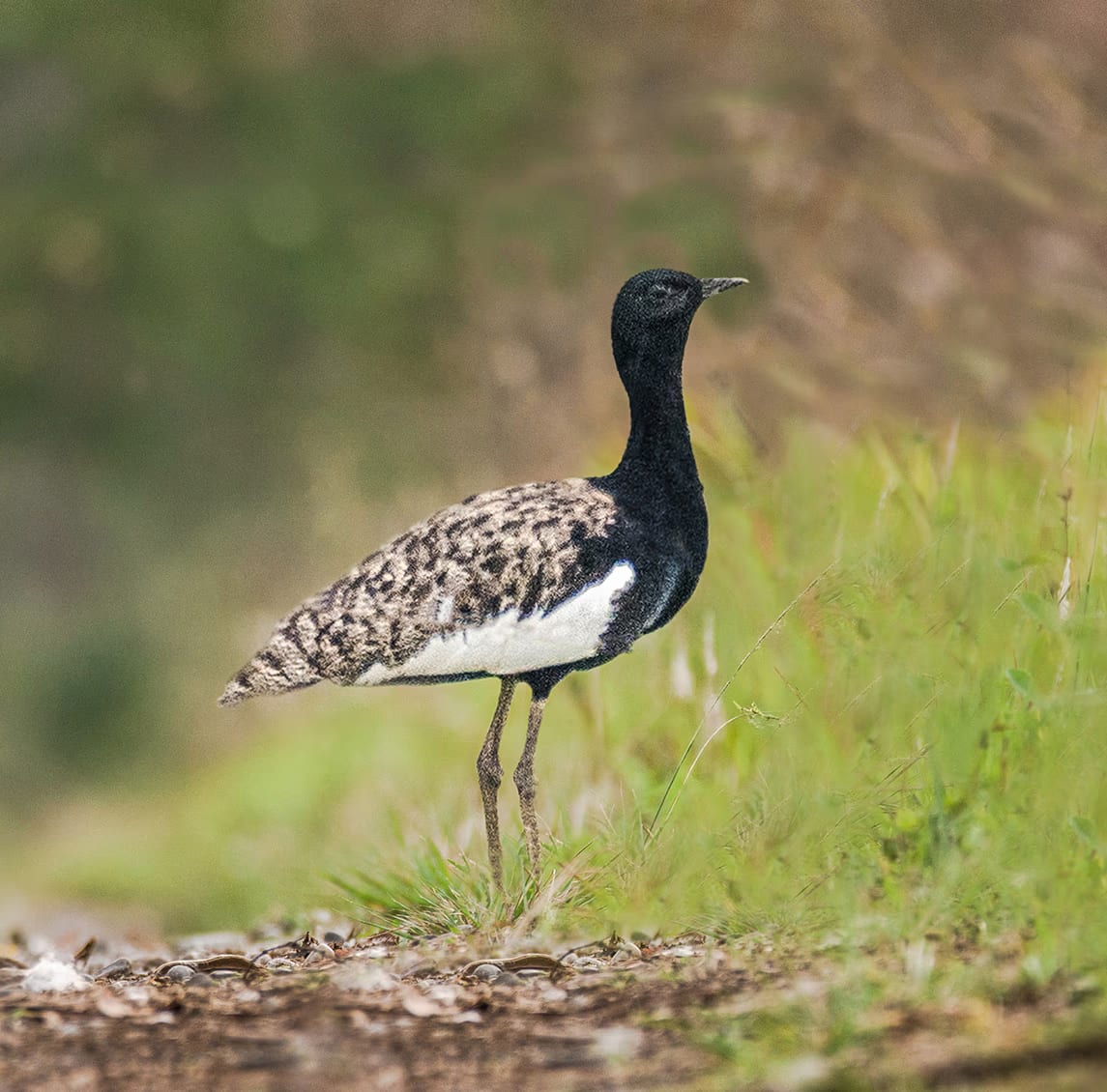
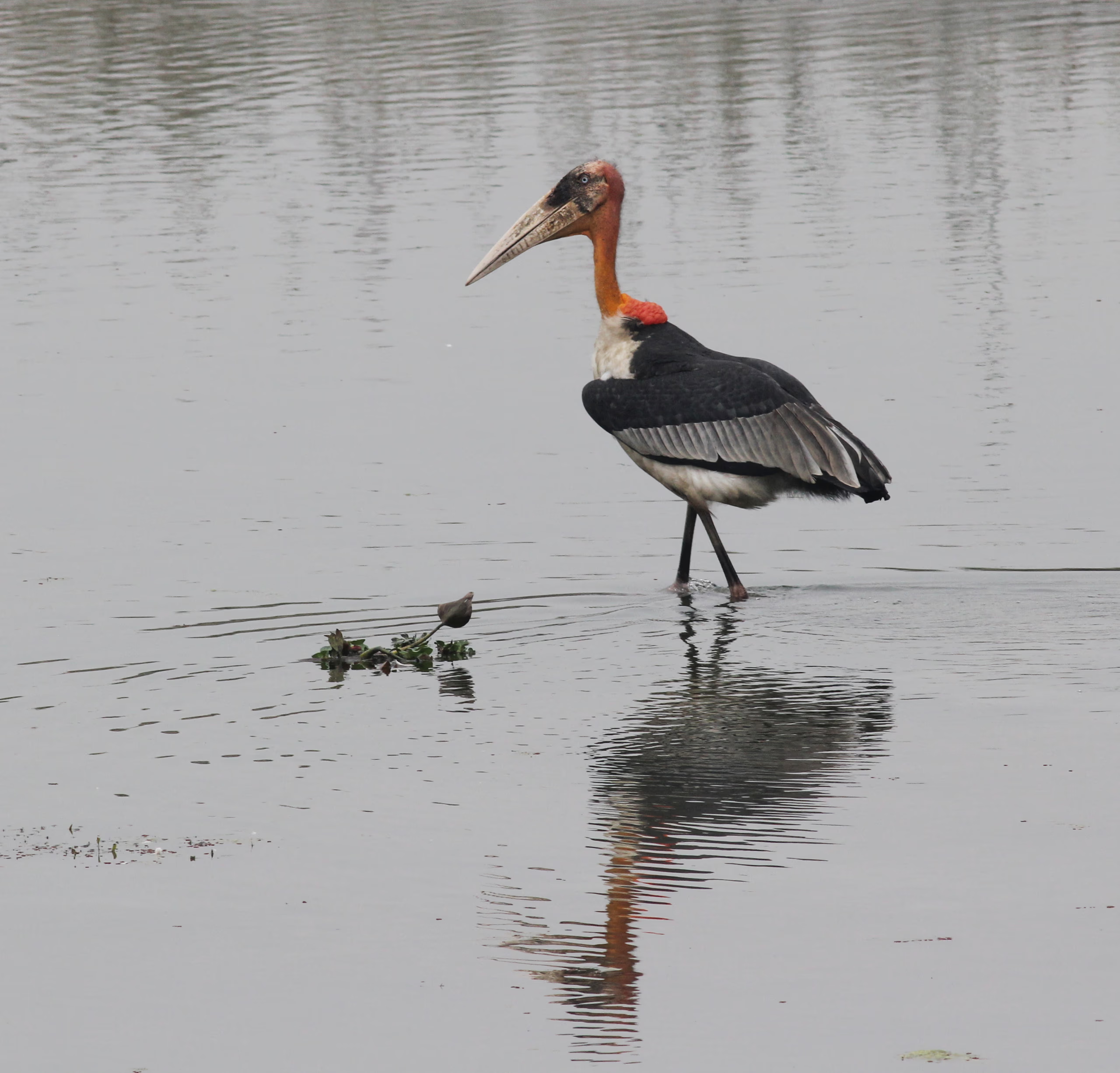
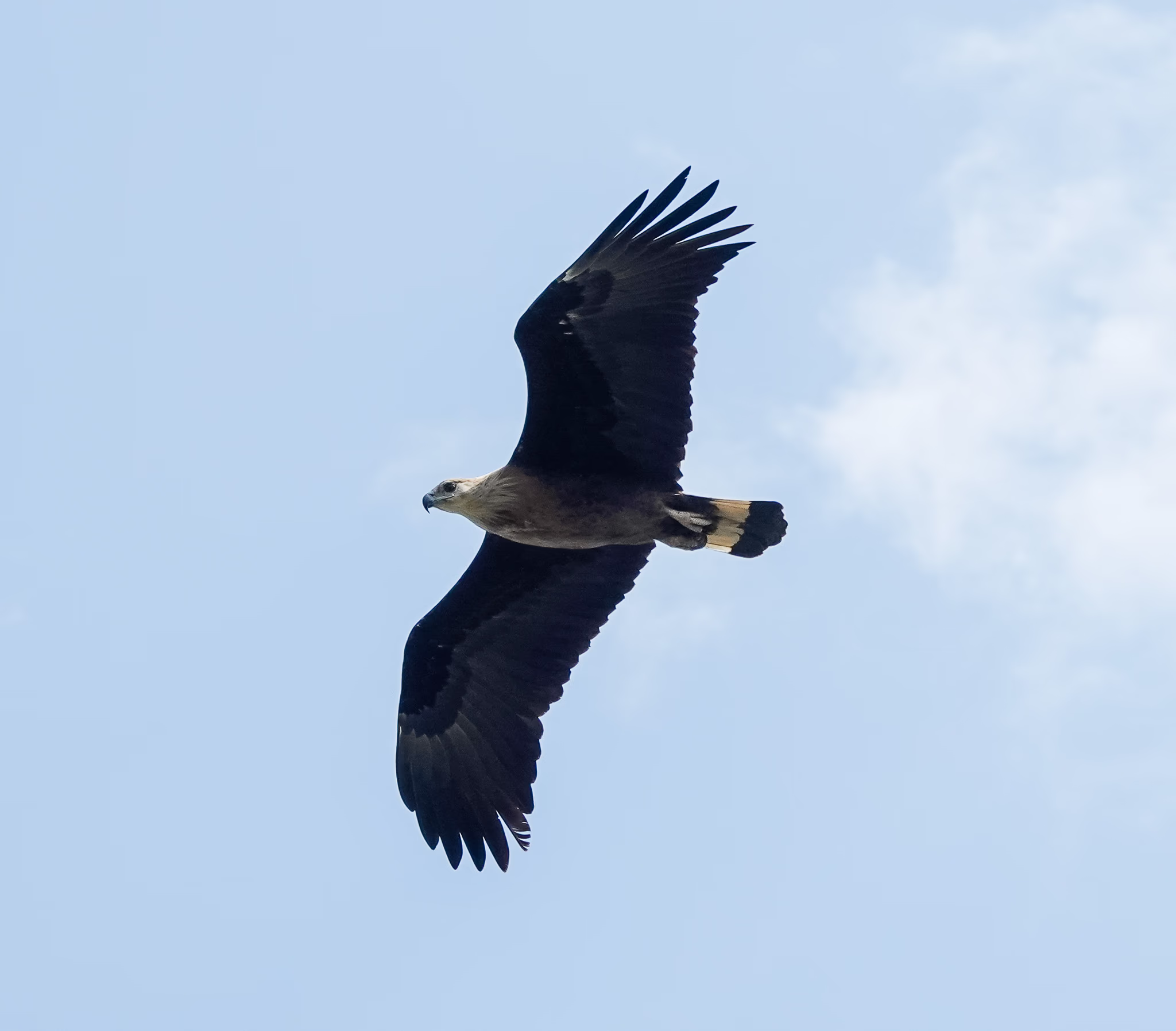
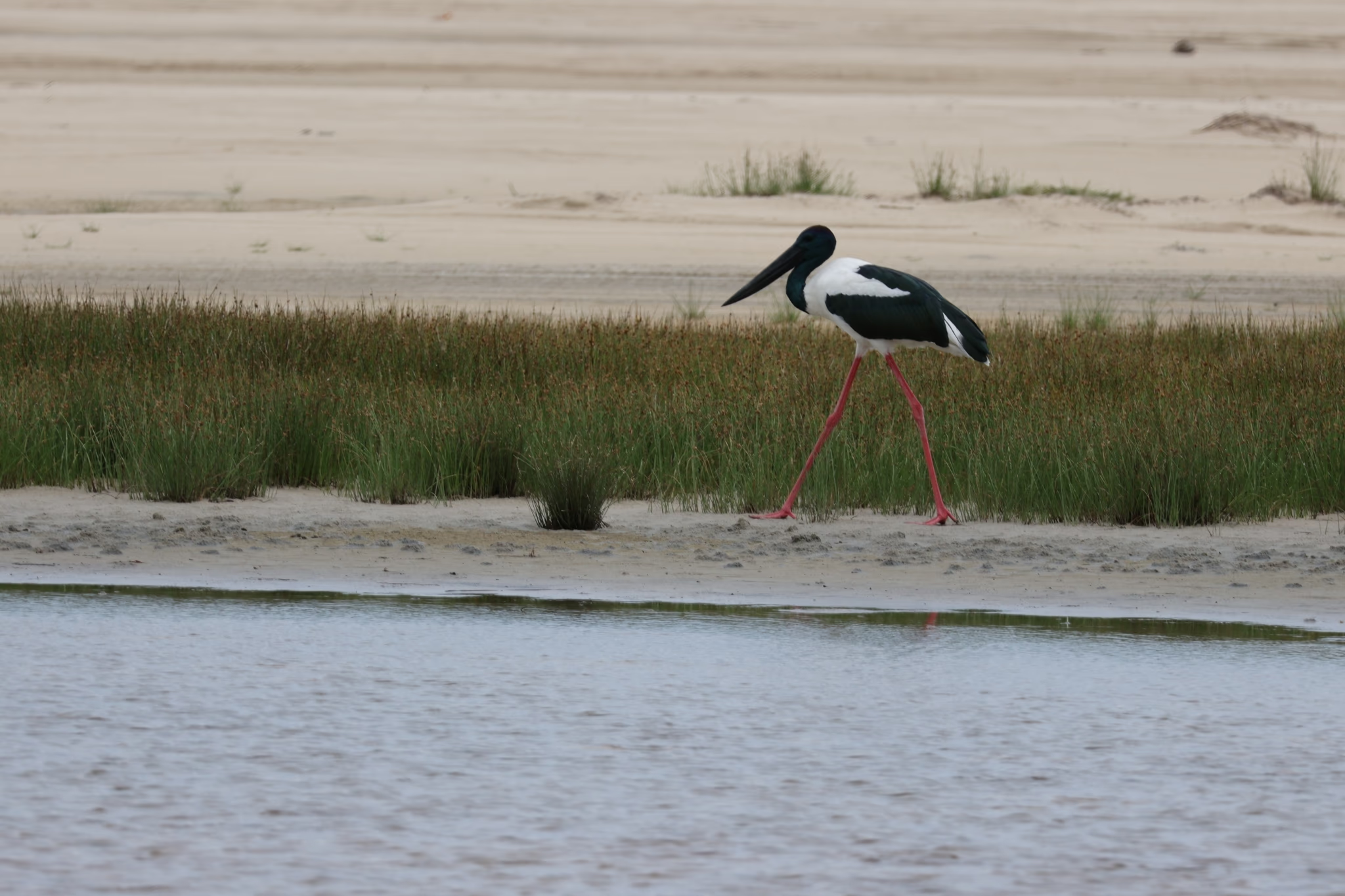
The Agoratoli or Eastern Range, reached further east, is the quiet, watery one. It is a mosaic of beels and woodland that is the park's birding heart. Pelicans, storks, eagles, and the winter migrants gather on its lakes, the crowds thin out, and rhino and buffalo come down to the water. The floodplain grass is also one of the best places on earth to find the rare and declining Bengal florican, a bustard of the wet grassland.
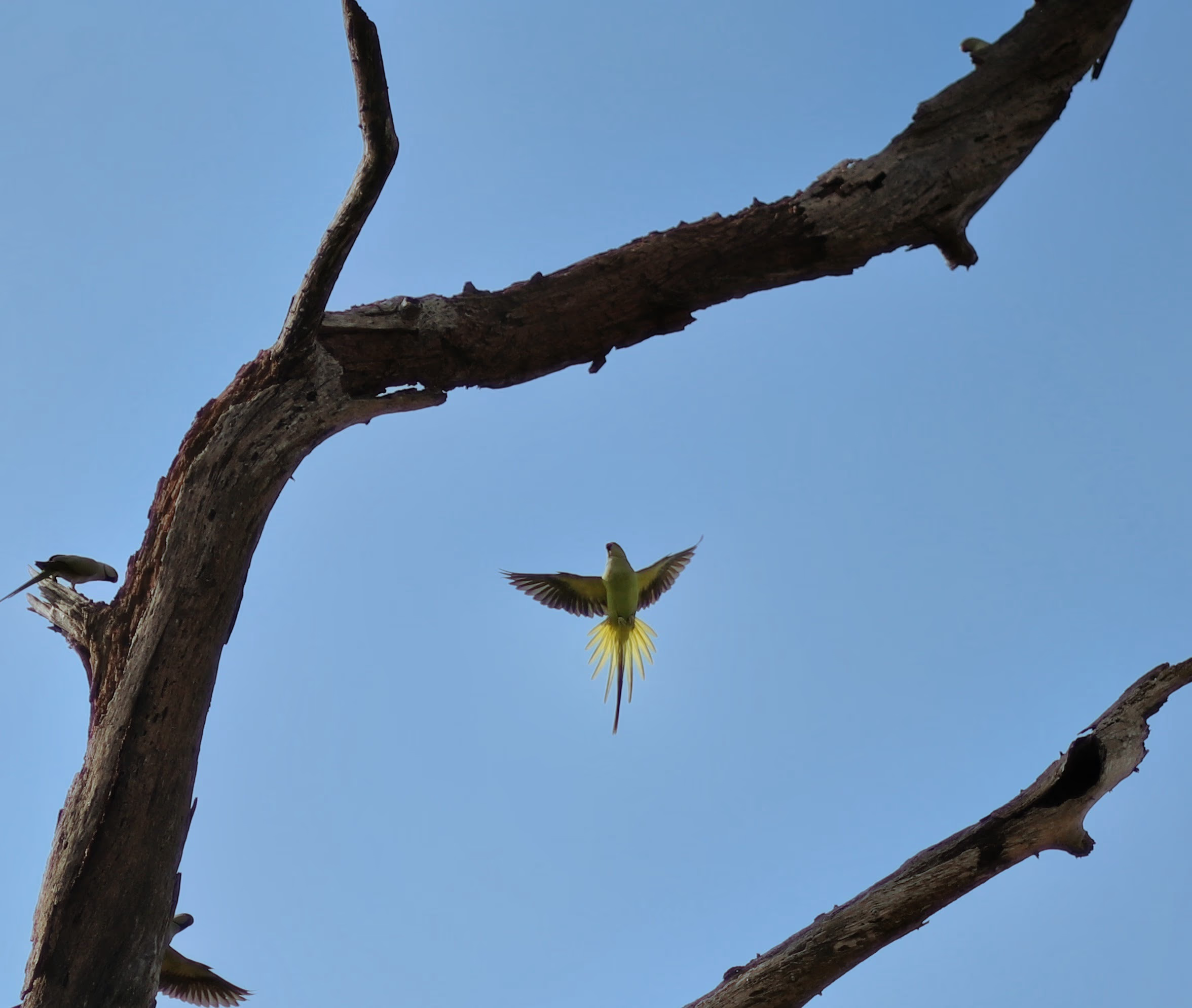
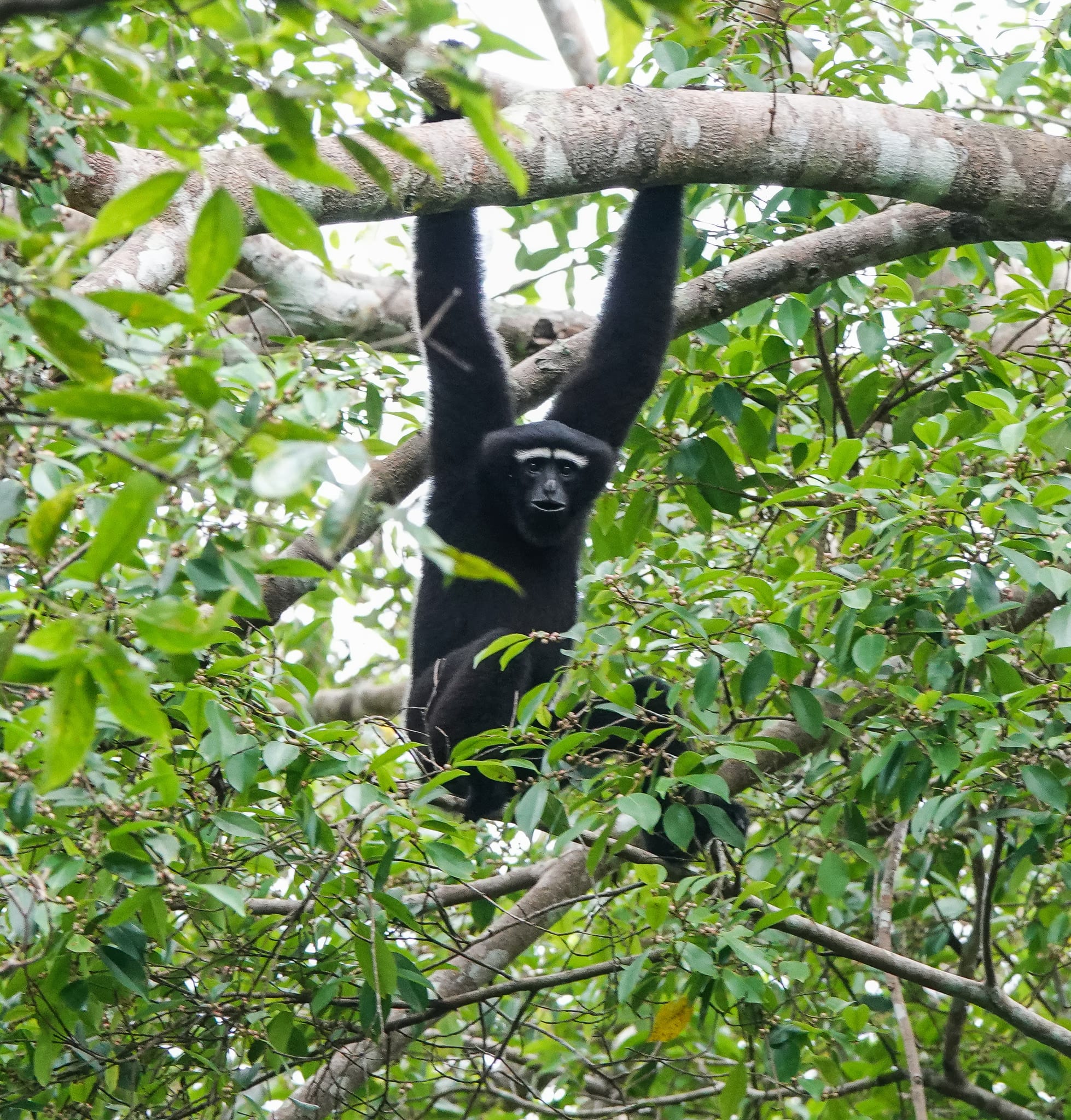
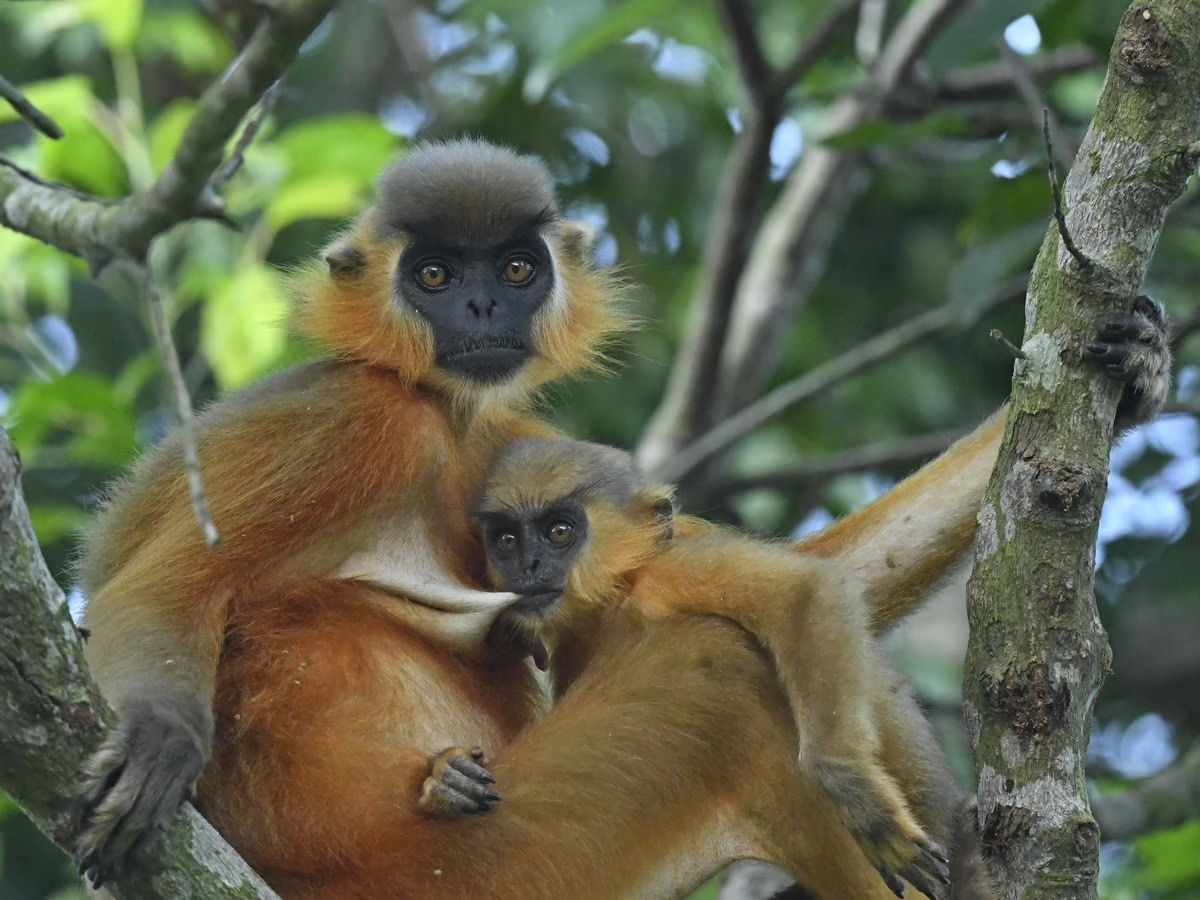
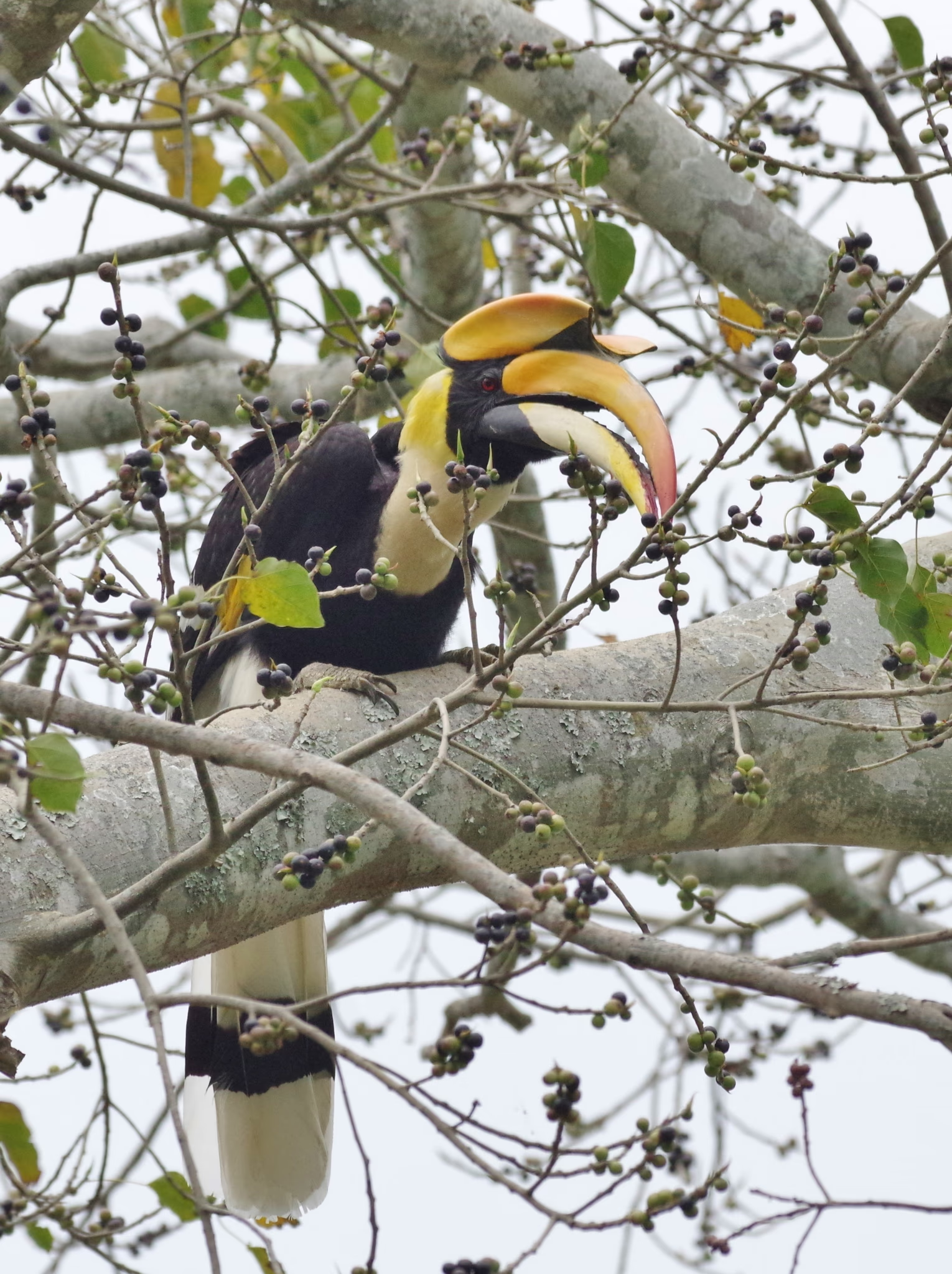
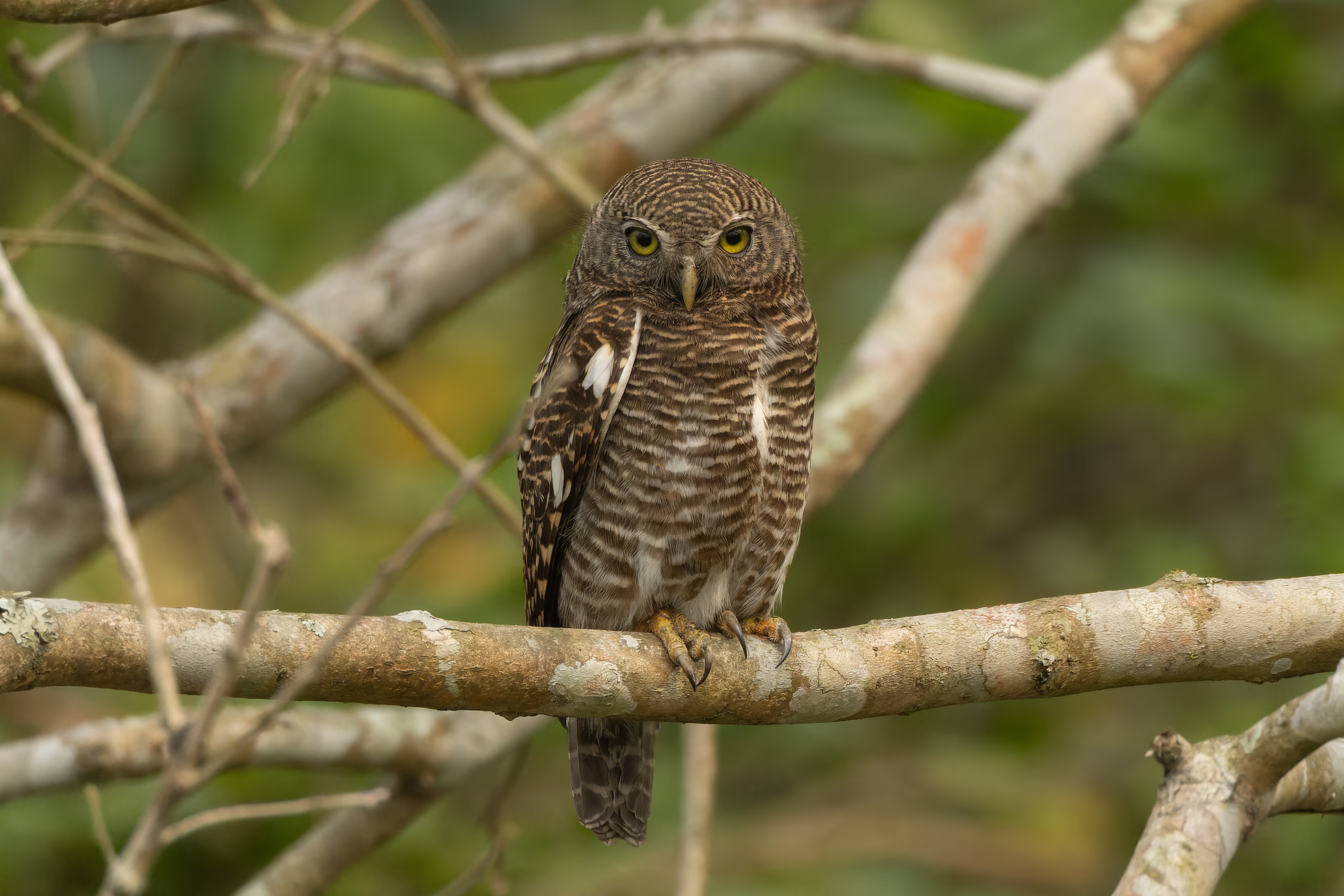
The Burapahar Range, at the western end, is entered through the Ghorakati gate. It is the odd one out, hilly and forested rather than flat grassland. It is the place to look for primates, including the hoolock gibbon, India's only ape, and for forest birds such as the hornbills and the white-cheeked partridge. Between them the four ranges hold nearly the whole range of the park's habitats. That is why no single safari sees all of Kaziranga.
Visiting
Kaziranga lies along the Brahmaputra in central Assam, on the main road between Guwahati and Jorhat. It is an easy half-day's drive from either, and most lodges cluster around Kohora. The park is open in the dry season, roughly November to April, and closed through the monsoon flood. Game-viewing is by jeep safari in all four ranges, in a morning and an afternoon slot of one to three hours each. It is also by elephant-back ride at dawn in the Kohora and Bagori ranges, where it is permitted. The early morning, with the mist still on the grass, is the prime time. Permits, vehicles, and an armed forest guard are arranged through the range office or a lodge. The species catalogue below lists what may be seen, with best months and conservation status.