If khar and tenga are the everyday poles of Assamese cooking, pitha is its festival face, a whole family of rice-flour cakes and rolls, sweet and savoury alike, that are fried, roasted and steamed into the celebratory heart of the Assamese kitchen. At Bihu the whole house fills with the smell of pitha freshly made, and no festival table in the valley is thought complete without it.
Cakes of rice
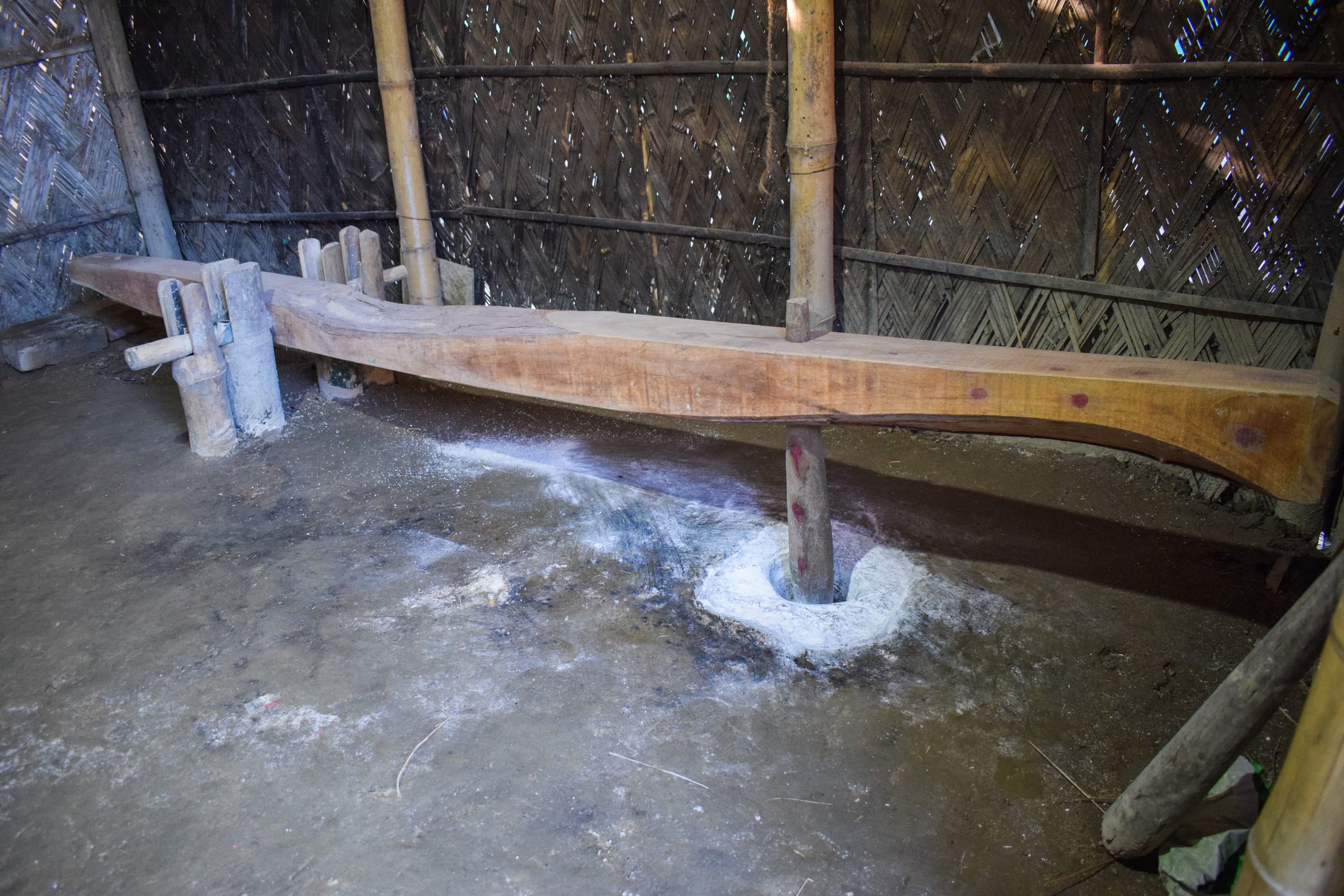
Pitha is built on the valley’s staple, rice. The finest are made from the sticky glutinous rice the Assamese call bora saul. Some use the sun-dried xaali saul instead. The rice is soaked, then pounded to flour, by tradition in the foot-driven dheki, the pedal husking lever of the old kitchen. The flour is worked into a dough or a batter. It is then filled or sweetened, most often with sesame, grated coconut and jaggery. A filled pitha holds its stuffing in a pocket the cooks call the khol, and the filling itself is the pur.
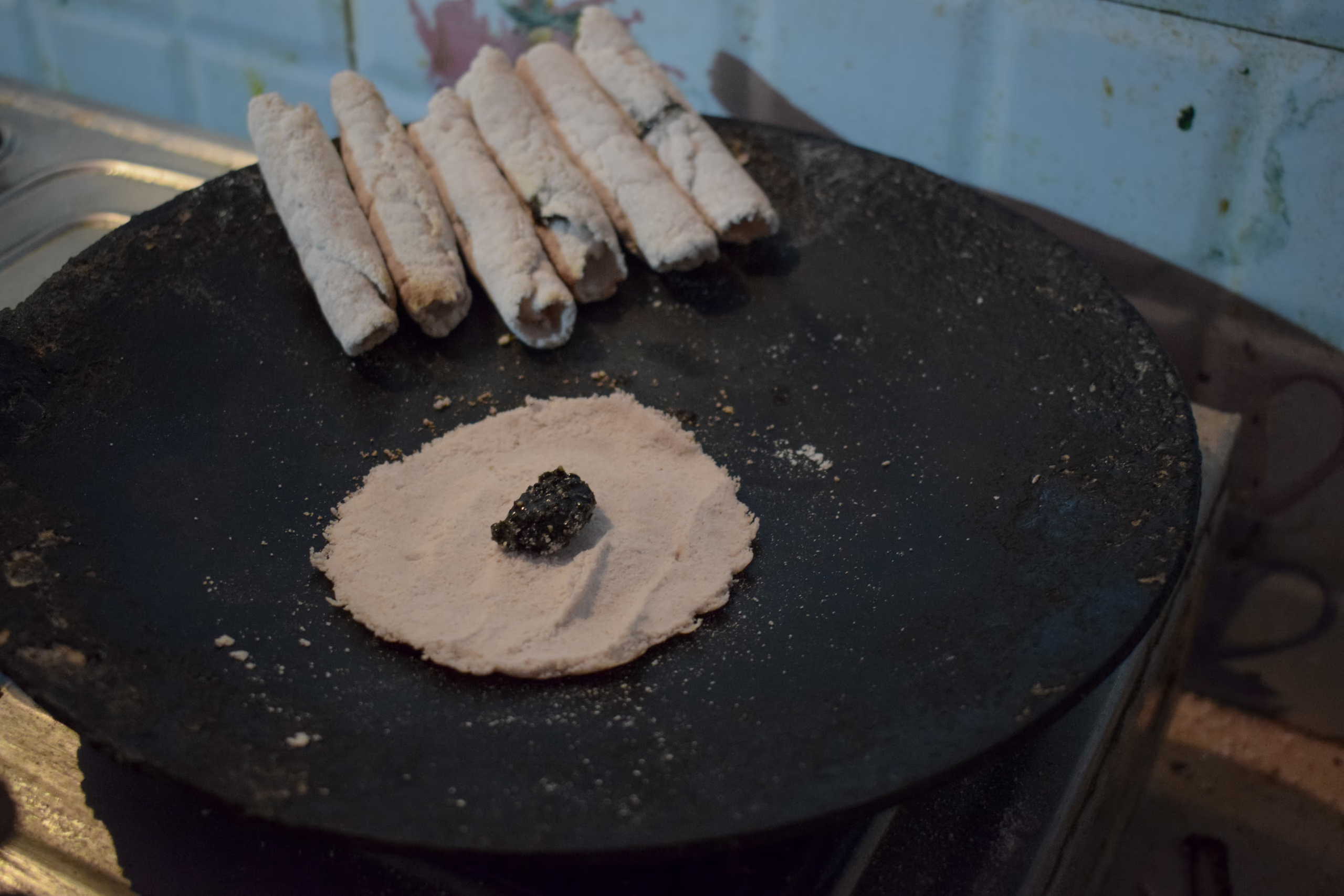
The forms are many, and each carries its own name and method. The til pitha is a slim cigar-shaped roll wrapped around a sesame-and-jaggery filling. The ghila pitha, said to be named for its round knee-like shape, is a fried cake of bora rice and jaggery, and turns savoury when salt takes the place of the jaggery. The tel pitha is simply fried in oil. The sunga pitha is rice and jaggery packed into a green bamboo tube and roasted over the fire, then slid out and eaten with warm milk. The layered tekeli pitha is steamed in the mouth of an earthenware pot, the tekeli, while a close cousin bakes faster in a kettle. Beyond these run a long roll of others, among them the kholasapori, the muthiya, the xutuli and the coconut-rich narikol pitha. Each is one more variation on a single theme. Rice is transformed, by skill and patience, into the food of celebration. This is the festive cookery B.K. Barua noted among Assamese customs.
Pitha is not Assam’s alone. The same word and the same idea run across the eastern rice belt. Kindred cakes are made in Bengal, Odisha, Bihar and Bangladesh, sweet or savoury, steamed or fried. The Assamese branch keeps its own repertoire and its own occasions, but it belongs to that wider family of the rice-eating east.
The Bihu table
Pitha is inseparable from Bihu. It belongs above all to the harvest Magh Bihu, the winter feast also called Bhogali, from bhog, eating and enjoyment. This is the festival when the granaries stand full and feasting is the whole point. Pithas are eaten in quantity through the night, and by custom cast into the meji, the great bonfire lit at dawn. They also grace the spring Rongali Bihu, the other great feast of the Assamese year.
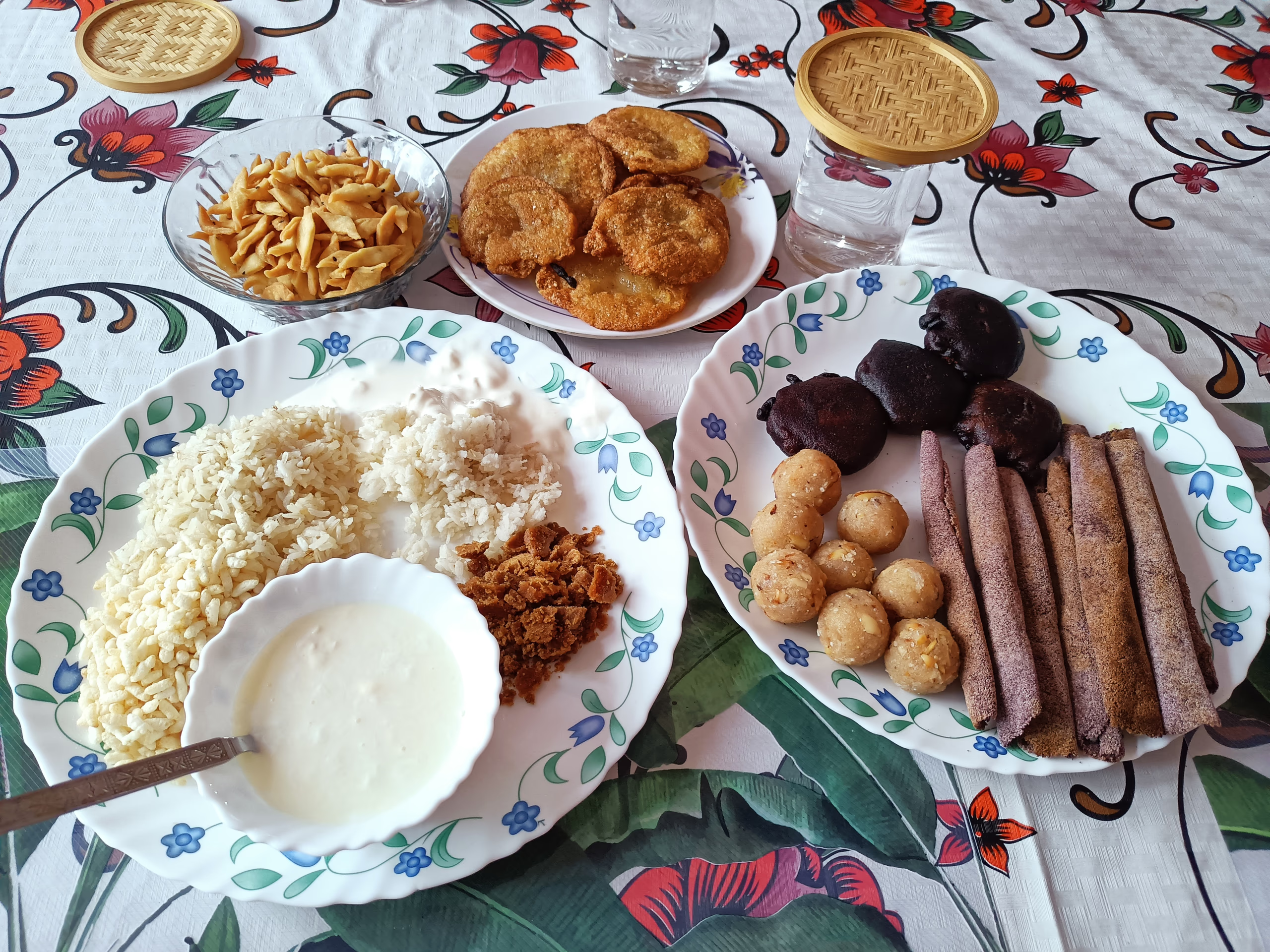
At the festival table pitha does not stand alone. It sits beside the laru, the sweet balls of sesame, coconut or puffed rice bound with jaggery. It sits too within the jolpan, the Assamese tiffin spread that opens a festival morning. The jolpan is a small art of its own. It gathers the light rices, the flattened chira, the puffed muri and akhoi, and the soft komal saul that softens in warm water without cooking, and serves them with curd, milk and jaggery. Pitha is counted an inseparable part of the jolpan. Together pitha, laru and jolpan are the edible expression of the agricultural calendar. They are the reward, in sweetness, of the gathered harvest.
An everyday art made festive
Pitha is the celebratory face of an everyday rice culture. It is the same grain that feeds the valley daily, raised on festival occasions into something made with care and shared with guests. What sets pitha apart is not a special ingredient but a special effort: the same rice becomes festive food only through hours of labour that ordinary meals never demand. That labour has always been women’s work in the main, the soaking, the pounding and the long patient shaping that a good pitha requires, and the skill has passed from mother to daughter as much as any written recipe. A house judged its cooks by their pitha, and to serve it to a guest is an act of welcome. The season suits the work: pitha belongs to the cool months when the new crop is in and the kitchen has time to spare, so the food is bound to both the calendar and the household in a way daily cooking is not.
In the modern period the pithas have moved beyond the home. They are sold in shops and served in restaurants, packed as gifts and sent across distances, and made anew in the diaspora kitchen wherever Assamese have settled. Something is traded in the move, for the shop-bought cake rarely carries the labour or the occasion of the one shaped at home, yet the forms and the names endure, and the festival travels with them. They carry the festival home wherever Assamese go, a festival cookery long noted in the folklore record of the region.