Garhgaon lies a short way east of modern Sivasagar. It was the chief capital of the Ahom kingdom for the better part of two centuries. From here the Swargadeos ruled through the kingdom’s long rise to mastery of the Brahmaputra valley. Its very name, the fort-village, records what it was. This was not a town in the ordinary sense but a great ramparted royal enclosure, a capital of earthen walls, gates and tanks set down on the upper-Assam plain. What the visitor sees today is chiefly the tall, receding Kareng Ghar palace of the later masonry rebuilding. But the ground it stands on is the long political heart of the Ahom state. It is the place where the dynasty grew from a small upland chieftaincy into the power that would hold Assam against the Mughals.
The founding of the fort-village
Garhgaon was established as the fixed Ahom capital in the middle of the sixteenth century. This was conventionally under Swargadeo Suklenmung, who reigned from about 1539 to 1552. He is remembered to history as the Garhgaya Raja, the king of Garhgaon, a title that records the move itself. Before him the Ahom court had shifted its seat several times across the upper-Assam country since the first kings. With Garhgaon it settled. The choice of a single, fortified, permanent capital was itself part of the kingdom’s coming of age. The capital was laid out as a planned, ramparted town, ringed by earthen walls and a moat and entered through great gateways. Its interior was filled with the palace, the offices of state, the houses of the nobility and the excavated tanks that supplied it. From here the Swargadeos ran the machinery that made the kingdom formidable. Above all there was the paik system, the universal labour-and-militia levy through which every able man owed service to the state. There were also the great offices that administered it: the Borbarua and Borphukan and the council of the Patra Mantris. Garhgaon was, in short, the command centre of a war-state at the height of its expansion.
It was from this capital that the kingdom became the dominant power of the valley. This happened under Suhungmung, the Dihingia Raja of the early sixteenth century, and the kings who followed. The Ahoms pushed out from their upper-Assam core. They absorbed the Chutiya kingdom to the east and broke the Kachari power to the south. In time the small chieftaincy of the first Swargadeos had grown into a state that commanded the whole upper valley. The wealth and the manpower of those conquests flowed back to Garhgaon. The fixed, fortified capital was both the instrument and the emblem of that rise, the seat from which a hill dynasty made itself the master of the plains. By the time the court began to shift its weight to Rangpur, the fort-village had already served as the headquarters of the longest-lived kingdom the region would know.
The capital the Mughals took
Garhgaon’s greatest trial came in 1662. The Mughal viceroy of Bengal, Mir Jumla, drove up the valley at the head of a great army and fleet. He took the Ahom capital itself and forced the Swargadeo to flee into the hills. The Garhgaon that fell was still largely a city of timber, bamboo and earth. The invaders plundered it and wintered in the occupied capital. This was the deepest humiliation the kingdom had yet suffered. Yet the occupation could not hold. Disease, the monsoon floods and the relentless harrying of the Ahom forces wore the Mughal army down. At last Mir Jumla withdrew, broken in health, and the kingdom recovered its capital. The episode hardened a determination that would culminate a decade later. That came in the destruction of a far larger Mughal fleet on the river at Saraighat and the final expulsion of the empire from Assam. The capital that the Mughals had briefly held was, in a sense, avenged a decade later on the water below Guwahati. There the Saraighat campaign broke the empire's fleet for good. But the low point itself is the drama that belongs to Garhgaon. That is the loss of the fort-village to disease, flood and the harrying of the Ahom forces. It is carried in the story below.
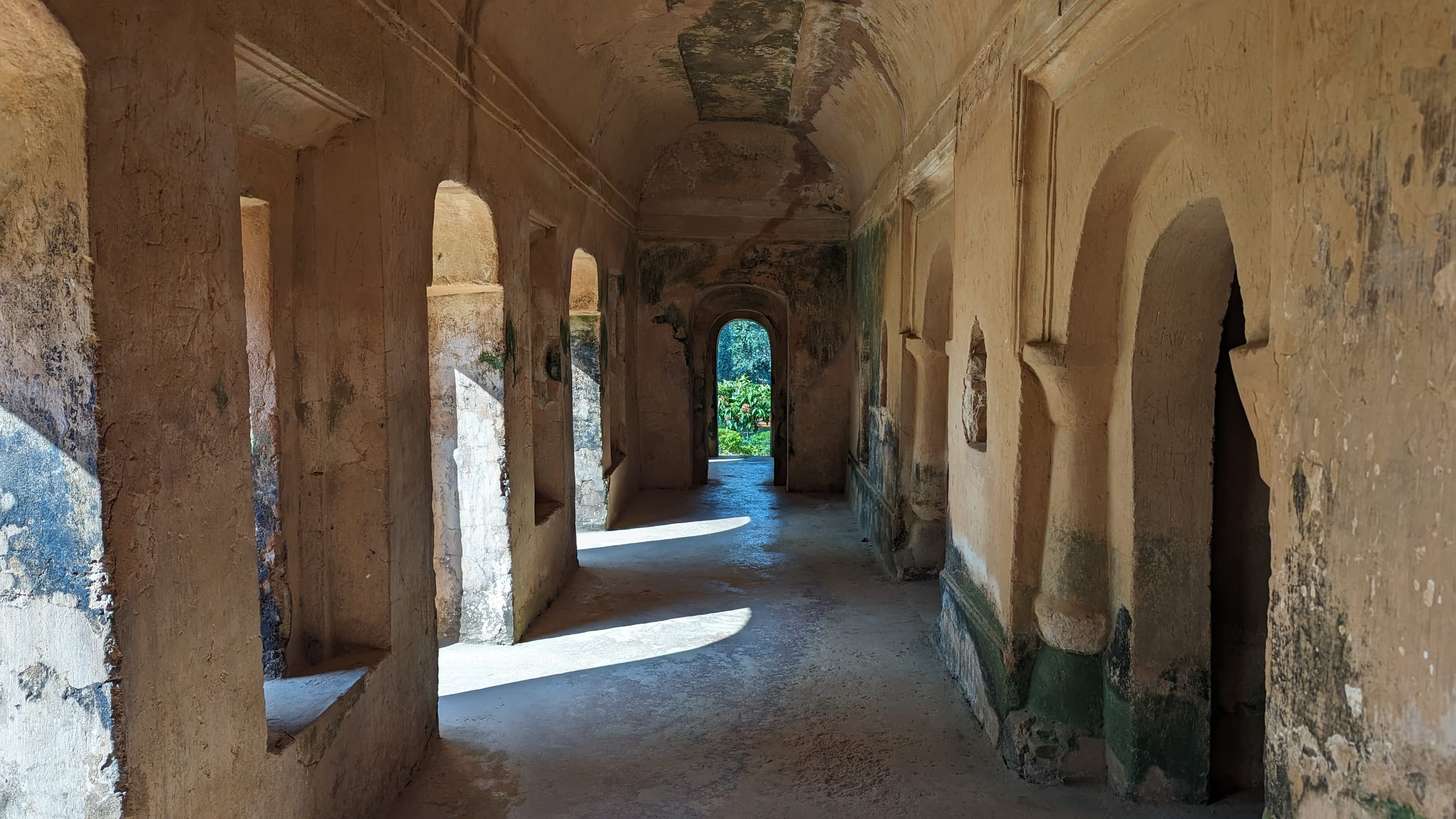
The fall and recovery of the capital became one of the great episodes of the Ahom resistance. It is recounted in full below.
The Manipuri alliance at the Ahom court
Garhgaon was not only a war-capital but a court of marriages and embassies. Its most consequential alliance reached south-east to the kingdom of Manipur. Through the later seventeenth and eighteenth centuries the two courts bound themselves with royal marriages, sending princesses each way. A Manipuri princess, Kuranganayani, became an Ahom queen. She would play a decisive hand in the bloody palace politics of the Moamoria years. The alliance carried more than a bride. It brought Manipuri Vaishnavism, dance and settlers into the valley. And it tied Assam's fortunes to the upheavals of the eastern kingdom. There was the forced Hinduisation under its convert-king, and, a century later, its doomed war with the British. The drama at the Ahom court itself is told in the story of its Manipuri queen, where Kuranganayani steered the murderous factional struggle of the Moamoria years.
The Kareng Ghar and the move to Rangpur
The grandest monument of the old capital came only after its near-destruction. The timber capital that Mir Jumla had burned was rebuilt. In the eighteenth century the older materials gave way to brick and stone. The masonry Kareng Ghar that stands at Garhgaon today belongs to this later rebuilding under the great builder-kings of the golden age. It is a tall multi-storeyed palace, its upper floors stepping back as they rise, and the best-preserved fragment of the old capital.
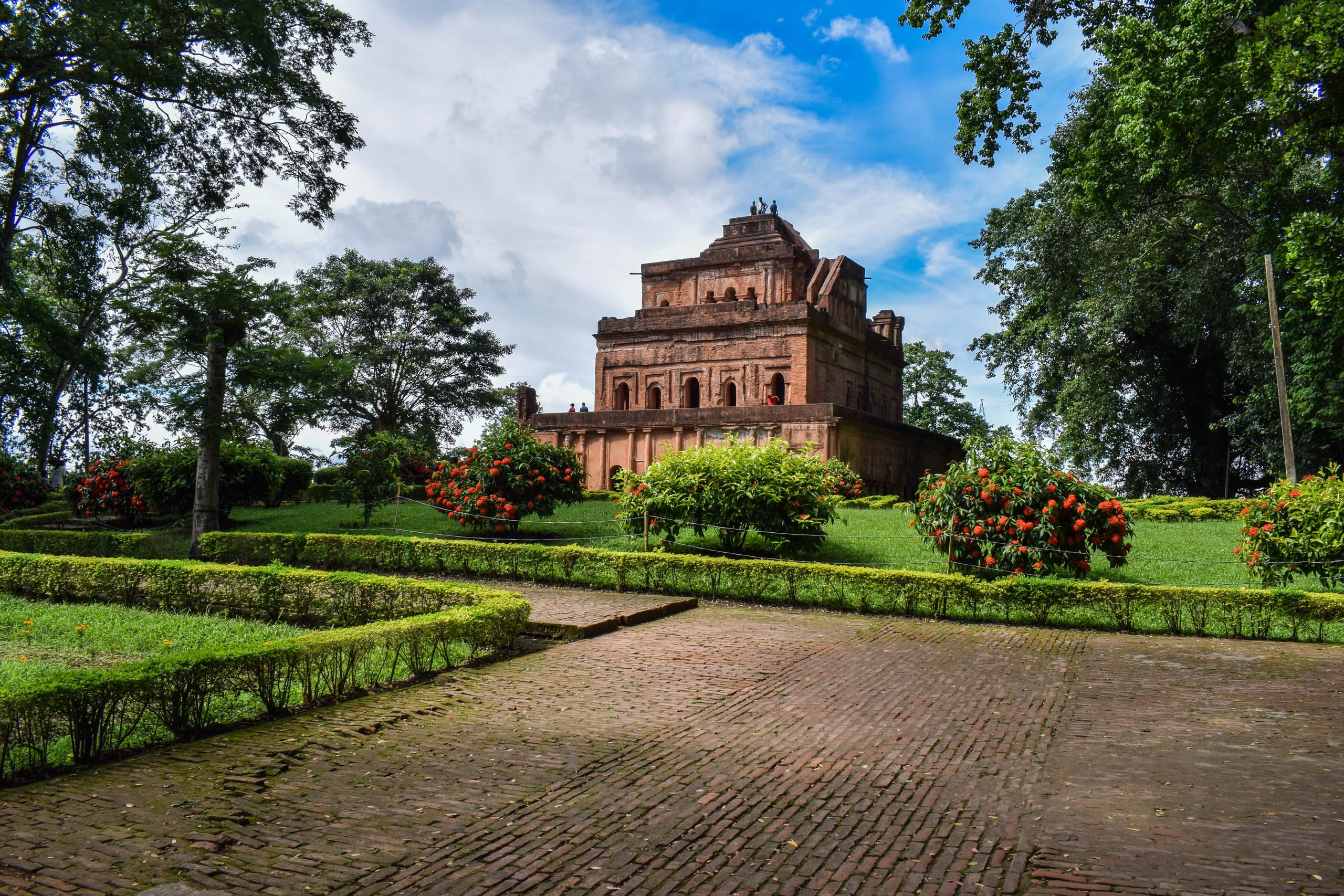
The palace stands amid the grounds and tanks of the old enclosure. By then, however, the centre of gravity of the court had begun to shift. From the later seventeenth century the Swargadeos increasingly favoured the new royal seat of Rangpur, a few miles off. There the great secular monuments of the Talatal Ghar and the Rang Ghar and the temples beside the Sivasagar tank rose in the eighteenth century. Garhgaon never lost its prestige as the ancestral capital. The two royal seats a short way apart together hold most of the surviving Ahom royal architecture. The older fort-village and the newer pleasure-capital mark, between them, the kingdom’s passage from a war-state to a settled monarchy.
Visiting
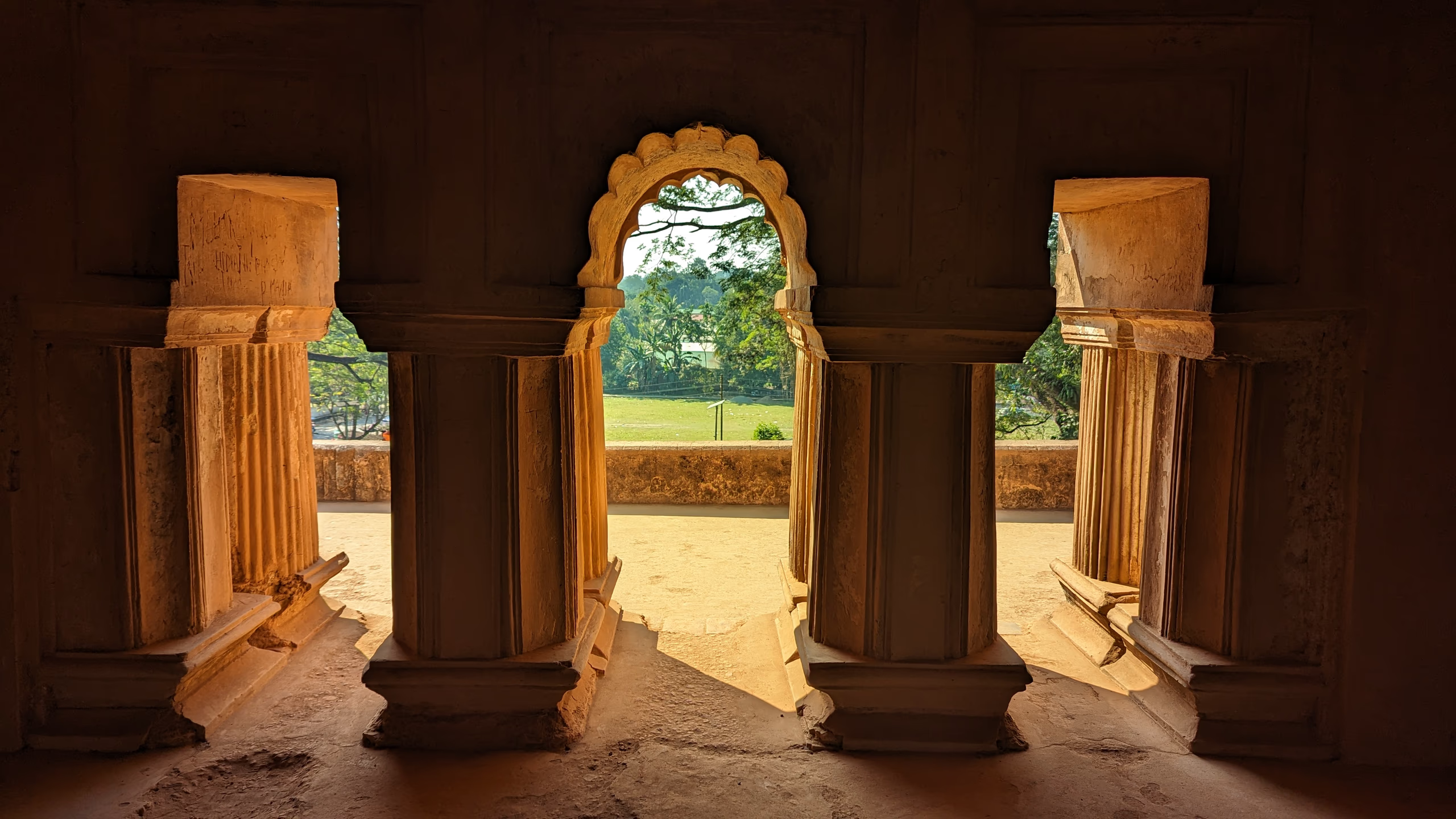
Garhgaon lies a short drive east of Sivasagar town. It is the natural eastern point of the Ahom-capital circuit, easily combined with the Rangpur monuments, the Rang Ghar and Talatal Ghar, and the temples and tanks at the Sivasagar tank. The surviving Kareng Ghar palace is open to visitors as a protected monument. The cooler, drier months from November to March are the most comfortable for the upper-Assam plains, when the country around the old capital is green after the harvest.