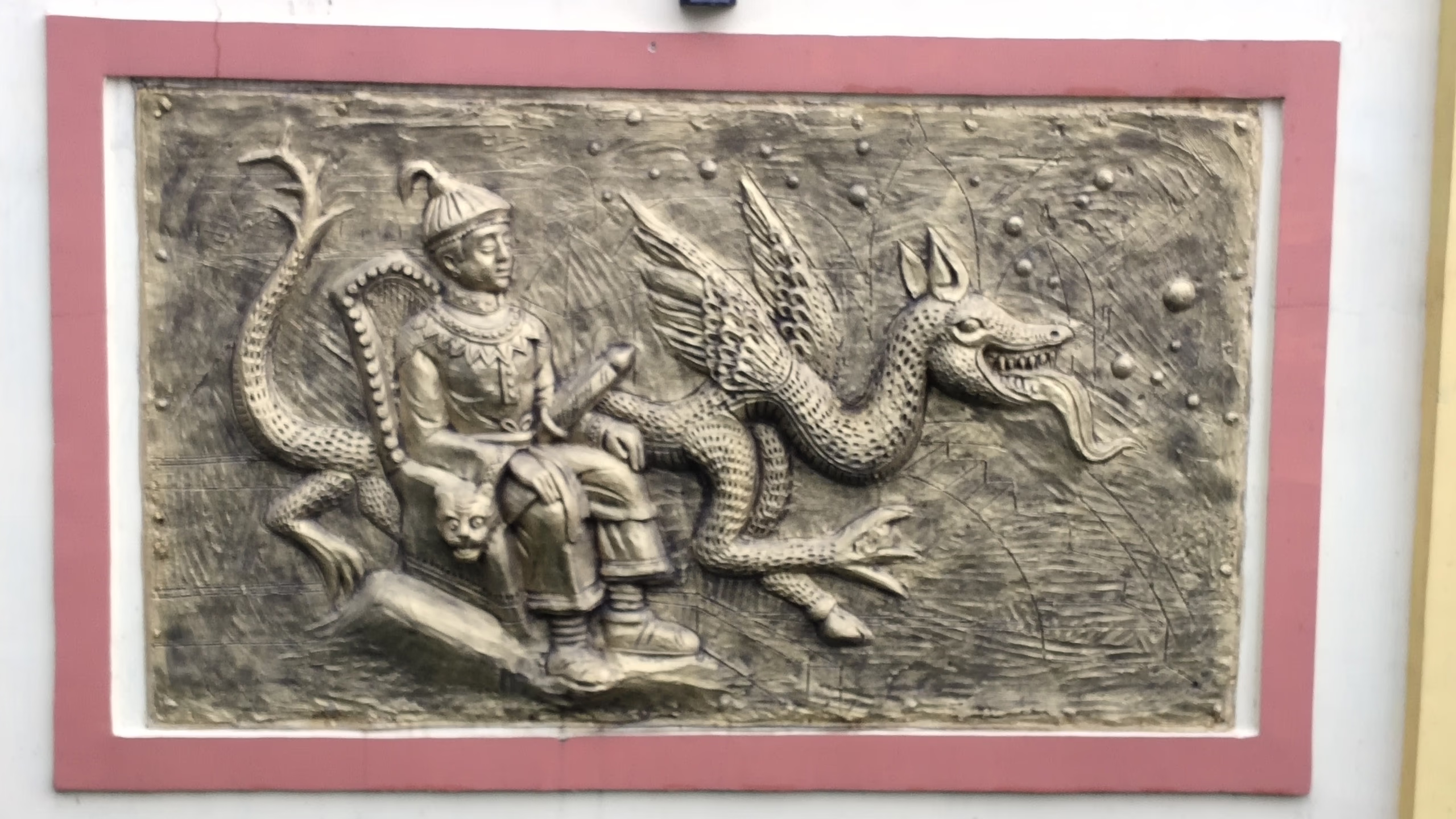
Sukaphaa reigned by tradition from 1228 to 1268. He was the Tai-Shan prince who led a small band over the eastern hills into the Brahmaputra valley. There he founded the Ahom kingdom. That state would rule upper Assam for close to six hundred years, and in the end it gave the land and a people their name. He is remembered by the title Chaolung, from the Tai words for lord (chao) and great (lung). His crossing is the founding act of medieval Assam. It is marked to this day on 2 December as Asom Divas (Sukaphaa Divas).
The crossing of the Patkai
Sukaphaa came out of Mong Mao, also called Mao-Lung, the Tai country of the upper Irrawaddy in the borderland where upper Burma meets present-day Yunnan, near the modern town of Ruili. Having lost out in a dynastic quarrel at home, he chose to lead his own following west in search of land he could hold for himself, setting out by tradition around 1215 on a journey through the hill country that took him some thirteen years. The buranjis number his contingent at around nine thousand, among them his three queens, his two sons and a daughter, his nobles and soldiers, and the priests who carried the rites of the Tai gods, with a baggage train the chronicles put at some three hundred horses and a pair of elephants. He crossed the Patkai by the Pangsau Pass, the gap in the range that long-distance trade and, centuries later, a wartime road would both use, and descended into the valley near Namrup around 1228.
What followed was not a conquest but a quarter-century of patient wandering. He planted small colonies at strategic places such as Khamjang and Tipam, kept clear of the densely settled tracts, and tested the open, well-watered plains before he settled on ground he meant to keep. The Patkai crossing has become the symbolic threshold of the kingdom, the moment a Tai warband became the seed of a valley state, and it is kept to this day each year as Asom Divas.
Charaideo and the policy of absorption
Around 1253 Sukaphaa fixed his capital at Charaideo. This hill became the dynastic necropolis, where the Ahom kings would raise their burial mounds, the maidams, for centuries after. It was inscribed on the UNESCO World Heritage List in July 2024, the first cultural property of the northeast so honoured. He did not enter empty land. The upper plains between the Dikhou and the Dichang were already held by the Morans and Borahis. The Chutia kingdom lay to the northeast and the Kacharis to the south. Sukaphaa did not rule as a closed conquering caste. He befriended those willing to join him, and dealt firmly with those who resisted. He bound the rest to the new polity by marriage. He took local wives, and by tradition wedded the daughters of the Moran and Borahi chiefs themselves. That policy of accommodation and absorption, not displacement, is the most consequential thing he established. It set the pattern by which a small Tai elite would, over six centuries, gradually become Assamese. It also, by tradition, gave the land its name. The local peoples are said to have called the newcomers by a name that in time became Ahom, and from it the wider name Asom, or Assam.
What he left behind
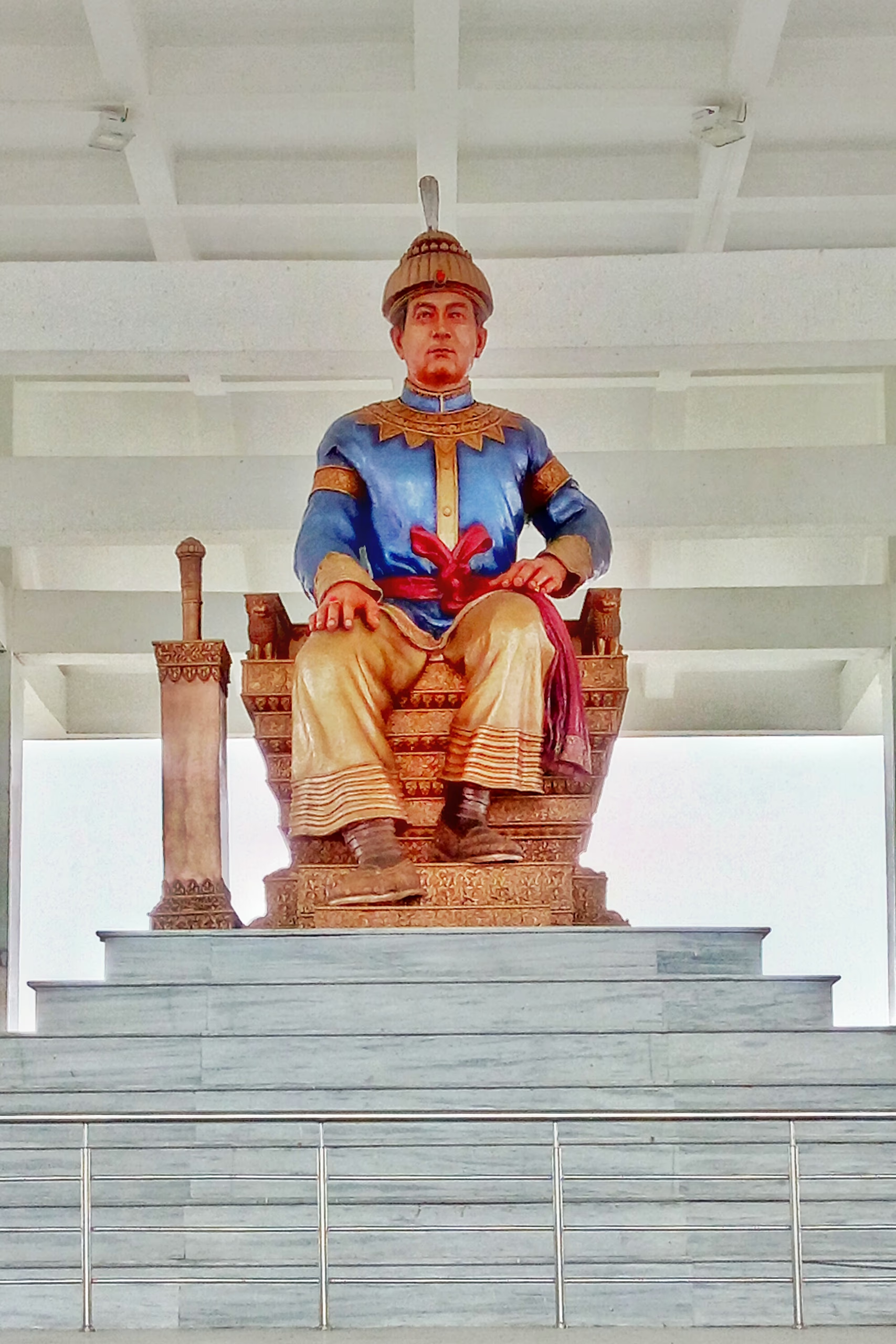
Sukaphaa died around 1268. He had secured a foothold rather than an empire. At his death the little state reached from the Brahmaputra in the west to the Dikhou in the south, bounded by the Naga hills to the east and the northern rivers. He bequeathed a capital, a method of rule, and a line. The expansion into the dominant power of the valley came generations later, under Suhungmung. But it grew from the seed he planted. The community that traces its origin to his migration is the Tai-Ahom, and it still keeps his memory. The modern Assamese calendar of public observance opens its year of historical commemoration with his crossing. The government of Assam formally set 2 December as Asom Divas in 1996, and in 2021 a large memorial statue of the founder was unveiled near Nazira, in the old heartland of his kingdom.
History and memory
Much of what is told of Sukaphaa comes from the buranjis, the Ahom court chronicles. These were written down generations after the events they describe. The Tai-Ahom kept them first in their own language, using the Tai script the migrants had carried across the hills, and later in Assamese as the court adopted the valley's tongue. They record reigns, wars, treaties, and lineages in a plain, year-by-year manner, and it is from them that the dynasty's own account of its origin survives. But they also blend record with the founding legend a dynasty tells about itself. The dates of the earliest reigns, the round number of nine thousand followers, and the thirteen-year passage of the hills are the kind of figures a chronicle shapes as much as reports. Modern historians therefore read the earliest entries with care, weighing them against neighbouring traditions and what little external evidence exists.
The caution over detail does not touch the main outcome, which is not in doubt. A Tai migration in the thirteenth century became the seed of the longest-lived state in the region's history, and the buranji tradition it produced is itself among the richest bodies of indigenous historical writing in India. That habit of keeping a continuous record is part of what Sukaphaa's line bequeathed. Its founder remains one of the few figures whose name an entire people still gathers to honour, and the annual observance of Asom Divas keeps both the man and the chronicle culture he began in living memory.