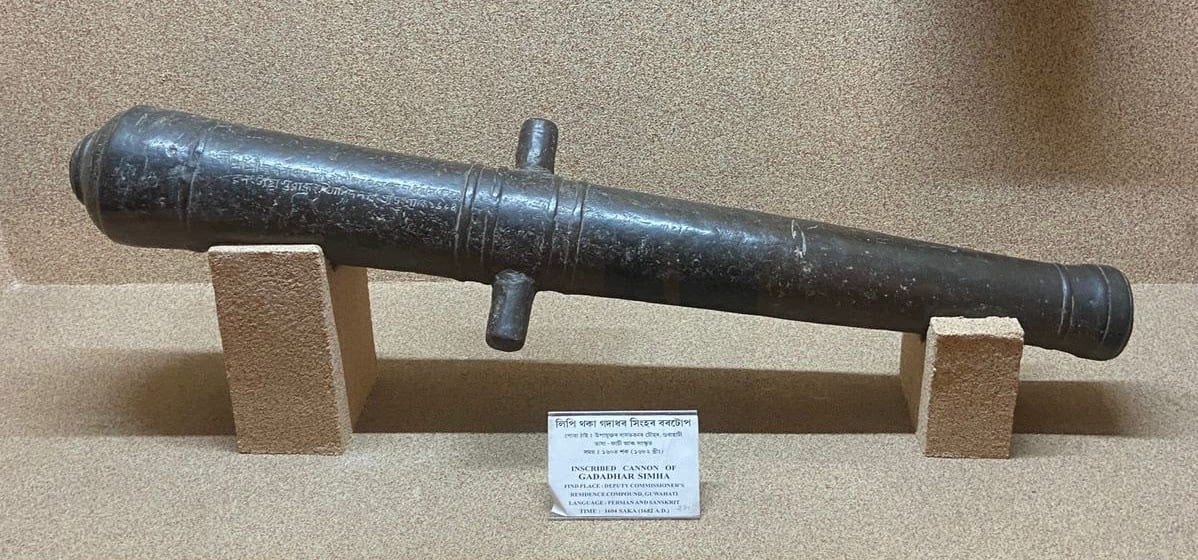
Gadadhar Singha, Tai name Supatphaa, was the Swargadeo of the Ahom kingdom from 1681 to 1696. He was the founder of the Tungkhungia line, the branch of the dynasty that would rule Assam until its fall. He came to the throne out of the anarchy of the late 1670s, when weak kings were raised and murdered in quick succession and real power had passed to the kingmaking nobles. He ended that anarchy and rebuilt the authority of the crown. The golden age of his son and grandsons rested on the order he restored.
Accession and the restoration of royal power
He had spent the years of prince-killing as a hunted fugitive under the name Gadapani, of the Tungkhungia branch of the royal line. His survival in hiding, and the death under torture of his wife Joymoti, are told in the story below. In 1681 he was brought out of hiding and raised up by the same faction-ridden court that had nearly destroyed the dynasty. He was formally crowned in 1682, taking the Tai coronation name Supatphaa. He was a hard ruler, made harder by what he had survived. Once secure, he broke the great officers who had been making and unmaking kings and re-centralised a state that had nearly dissolved into noble factions. He avenged the murdered minister Atan Burhagohain, who had held the kingdom together in its worst years and been killed in the chaos. He kept his capital in the old royal seat of Garhgaon, where by some accounts he settled at Barkola close by, and ruled from there for the rest of his reign. The chronicle of his line and its founder is the Tungkhungia Buranji, compiled from the records of the period.
Itakhuli and the close of the Mughal war
His first concern on taking the throne was the western frontier his enemies had given away. In August 1682 his forces stormed the Mughal position at Itakhuli, on the river above Guwahati, in the campaign the chronicles call the Itakhulir Ran. The army was led by his officer the Dihingia Alun Borbarua. The forts at Bansbari and Kajali fell at the first assault, and a river action near the mouth of the Bar Nadi delivered the whole Mughal fleet into Ahom hands. The Fauzdar of Guwahati fled, and the Ahoms drove the imperial troops back to the Manas river, which became the settled western boundary and held so until the coming of the British. Guwahati and Lower Assam were recovered for good. From that point the Mughal empire made no further serious attempt on Assam. The victory closed the long war traced in the chapter on the Ahom-Mughal wars, the conflict that had run from before Lachit Borphukan and Saraighat. With the western frontier finally settled, Gadadhar Singha could turn the strength of the restored crown inward, to building and to the discipline of the state.
Roads, building, and administration
To his reign tradition assigns the Dhodar Ali, a great trunk road running the length of upper Assam from Kamargaon toward the east, along with the Aka Ali and other roads of the age. It is said to have been built by setting idle and dissolute men to forced labour, the very name recalling the “dhod” or slothful who were pressed into it. The work was done through the standing levy of unpaid service that built the roads and tanks of the age. He is remembered for restoring discipline to that system of obligation and to the revenue of the state, on which the wealth of the coming age would depend. To fix that revenue he is credited with ordering a systematic survey of the land, for which surveyors are said to have been brought in from Koch Bihar and Bengal, a work so vast that it was completed only after his death. The units of land measurement then set in place, with their lecha, katha and bigha, are by tradition the ancestors of those still used across Assam. His reign also saw the crown issue its own silver coinage carrying inscriptions, a mark of the settled and confident state he had rebuilt. His works lie within the wider built landscape described in the stone capital, the brick-and-stone capital that his successors would complete and that gave the dynasty its lasting monuments.
Religious policy, death, and remembrance
Gadadhar Singha turned against the neo-Vaishnava monasteries, the sattras that had grown powerful and independent of the crown. He persecuted the Mahantas, the heads of those houses, and pressed them to submit to royal authority. By tradition the campaign was severe, and it fell not only on the non-Brahmin houses but reached even the sattras of the Brahmin-led Brahma order. Yet the same king drew the crown closer to Brahmanical Hinduism, and the earliest Ahom copper-plate grants of land to Brahmins and to Hindu temples date from his reign. The one policy was the shadow of the other. It opened the long quarrel between the Ahom crown and the Vaishnava establishment that his successors carried further, and that erupted a century later in the Moamoria rebellion which broke the kingdom. He died in 1696 and was buried in a great earthen maidam among the royal tombs at Charaideo, the ancestral burial ground of the dynasty. He was succeeded by his son Rudra Singha, who inherited a restored and confident kingdom and raised it to its cultural summit from the new capital at Rangpur. In Assam's historical memory Gadadhar Singha is the stern restorer, the man who saved the dynasty from itself and made the golden age possible. His persecution of the sattras is remembered as the dark counterpart of that achievement, the seed of the troubles to come.