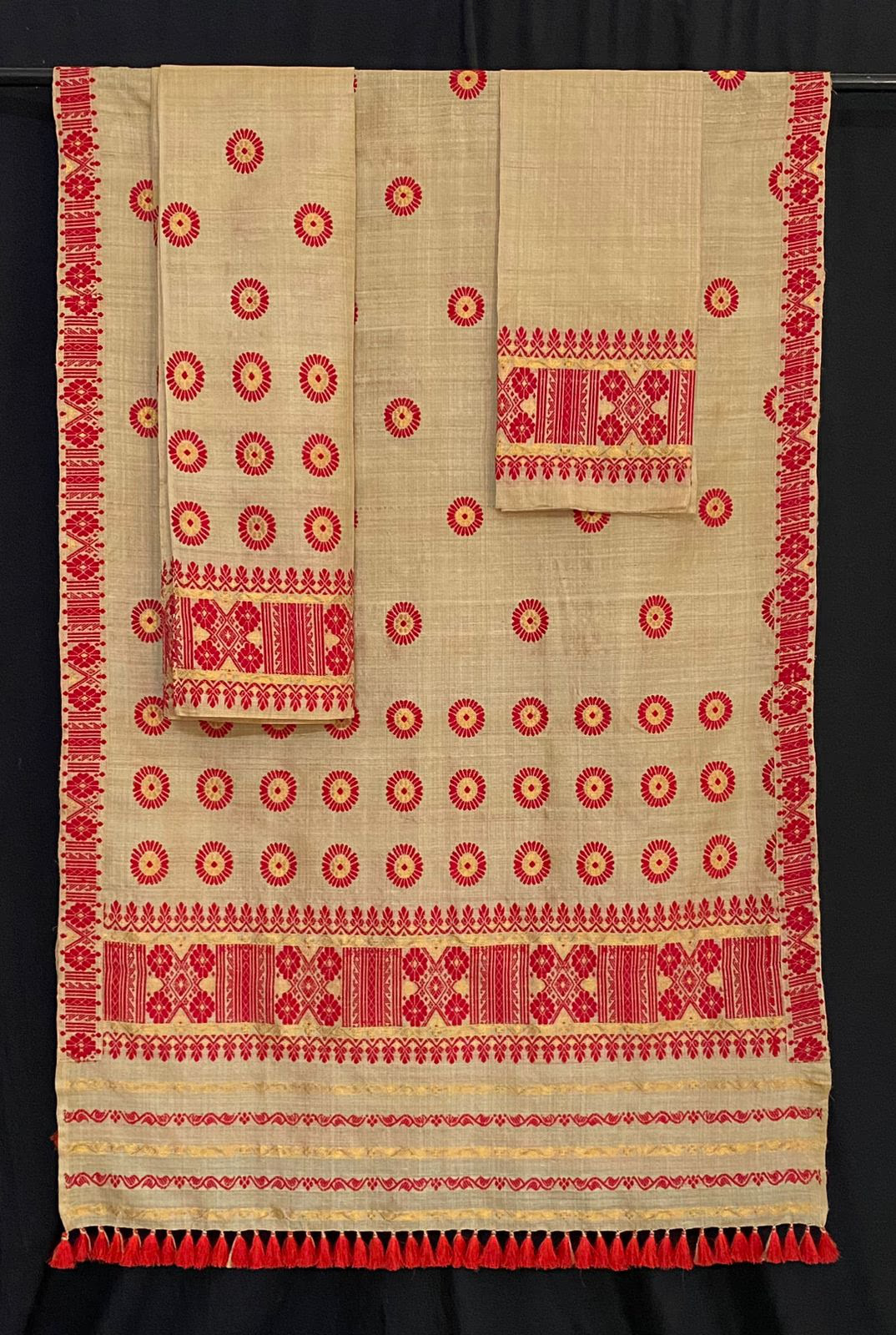
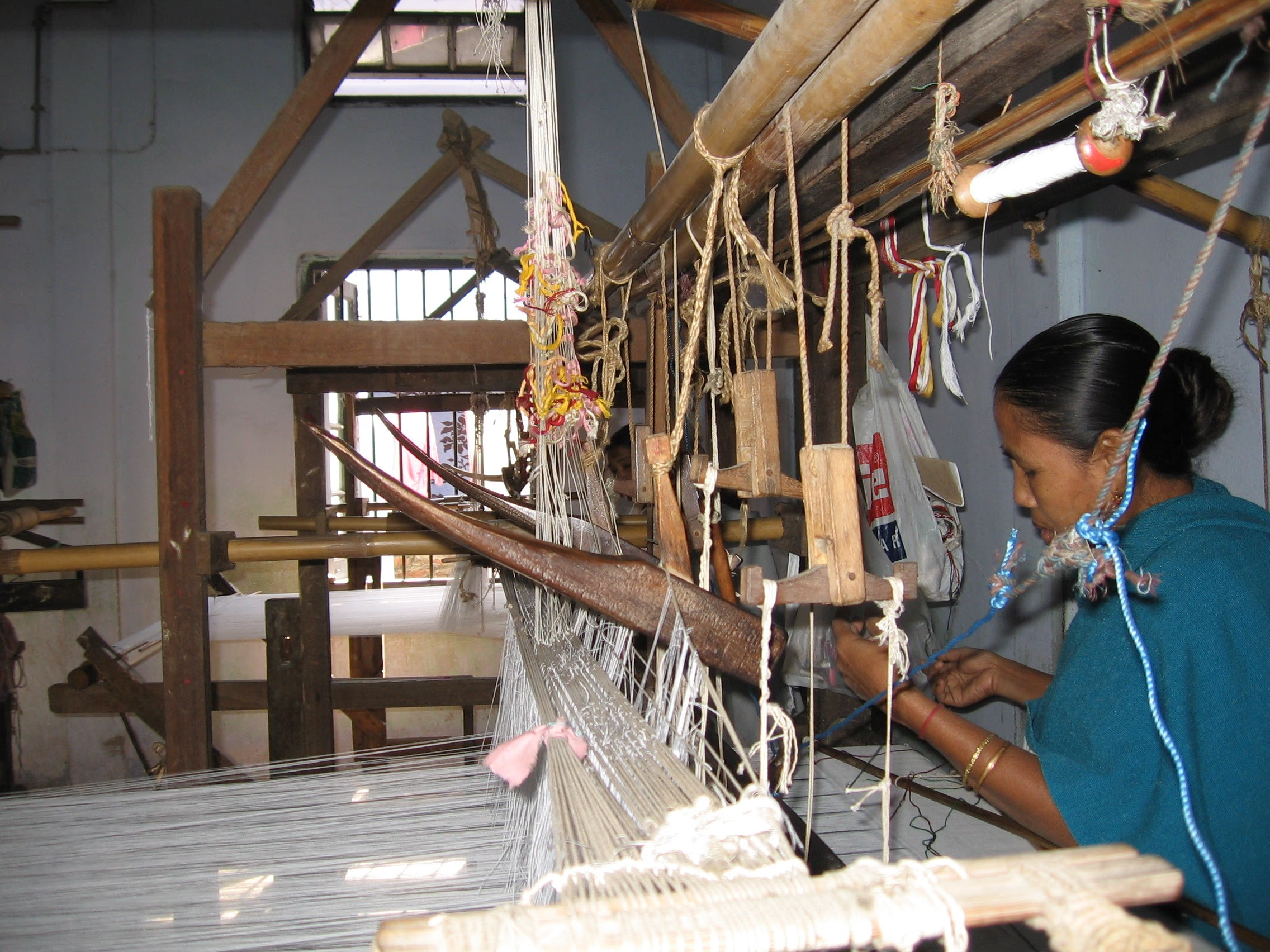
There is a kind of cloth in the old Ahom world that no loom could make by daylight. It had to be begun and finished inside a single night. The cotton was ginned, the thread spun, the warp laid, and the whole length woven through before the next dawn touched it. A wife made it for her husband when he went to war. Over it she spoke the words that turned cloth into armour. The Assamese called it the kavach kapor, the armour-cloth. The belief that travelled with it was absolute. A warrior who marched out wearing one, consecrated by his own wife’s hands in a single night’s work, could not be beaten. He would come home. This is the story of a woman who could not weave one in time, and of what she did instead.
The kingdom at the river’s edge
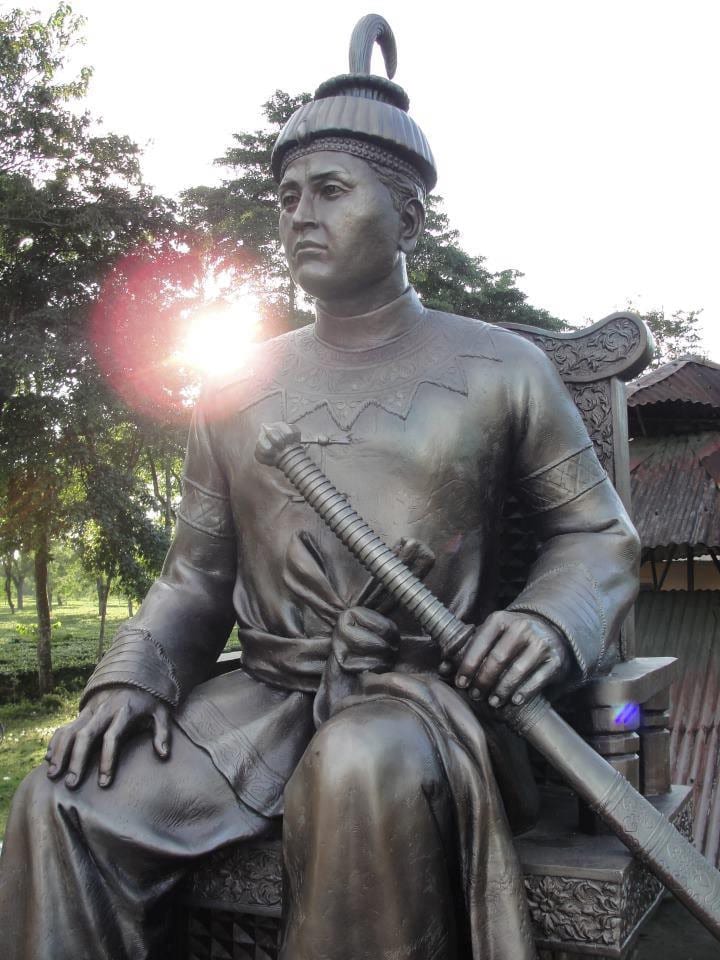
In the 1530s the Ahom kingdom was no longer the small hill principality that Sukaphaa had founded on the upper Brahmaputra three centuries before. Under Suhungmung, the Dihingia Raja, it had swallowed the Chutia country to the east and broken the Kacharis to the south. It had grown into the dominant power of the eastern valley. Power of that size draws the attention of other powers. To the west, beyond the lands the Ahoms held, lay the Sultanate of Bengal, the great Muslim state of the lower Ganga, looking eastward up the river. The collision, when it came, came in the person of a single hard soldier.
His name was Turbak, a Muslim commander from the west, said to have been of Turco-Afghan stock, sent up the valley by the Bengal court around 1532. He came at the head of a real field army: a strong body of cavalry, a train of war-elephants, and, decisive for what followed, a quantity of guns and cannon of a kind the valley had barely seen. The Ahoms had archers and spearmen and elephants of their own, and a fierce river-and-forest way of fighting. But they had nothing to answer powder with. The first encounters went badly. Turbak pushed up the Brahmaputra. The war settled into the country around the mouth of the Bharali, the clear northern tributary that comes down out of the hills to meet the great river near Tezpur.

The general who went without his cloth
Among the Ahom commanders in that war was a nobleman of the first rank, the Borgohain Phrasenmung, one of the great hereditary councillors of the kingdom. His wife was Mula Gabharu, herself of the royal blood, by the tradition a daughter of the Ahom king Supimphaa. The tradition that the Assamese have kept about the two of them turns on the cloth. When Phrasenmung was called to the front, the story goes, Mula Gabharu was unwell. She could not do the night’s work the armour-cloth demanded. The ginning, the spinning, the weaving, the consecrating, all of it had to be done between dusk and dawn. So her husband rode to war without the one thing that was held to make an Ahom warrior unkillable. He went to the front unarmoured.
He did not come home. In the hard fighting against Turbak’s force, after some days of battle, Phrasenmung Borgohain fell. He was one of several Ahom commanders killed in the disastrous run of engagements that nearly cost the kingdom its army. To Mula Gabharu the meaning of his death was not in doubt, and not in the enemy’s guns. He had died, she believed, because she had failed to weave his cloth. He had gone to the fighting without it, and the fighting had kept him. The grief and the guilt were one thing. She did with them what almost no one in her place and her century did. She did not retreat behind the walls to mourn. She decided to go to the war herself.
The band of women
What she raised was not an army but a company. It was not of soldiers but of women like herself. They were the wives and daughters of the other nobles, the great da-dangariya households of the court, who had also sent husbands and sons to the Bharali. Tradition keeps the names of some who rode with her, women remembered as Jayanti, Pamila and Lalita. She gathered them, armed them, and led them out toward the front. She herself took up the hengdang, the long single-edged sword of the Ahoms. Tradition has her riding to the battlefield on an elephant, in the place a commander rode. She was a widow with no training in arms, at the head of a band of women who had none either, going deliberately into a war that the kingdom’s trained men were losing.
The effect of it, the buranjis remember, was not small. The sight of the noblewomen riding to the fight is said to have shamed and steadied the Ahom ranks. It put a new heart into men who had been beaten and were wavering. Mula Gabharu herself fought, by every account, with a courage that had nothing to do with skill. By tradition she cut her way forward until she reached Turbak himself, and there her charge ended. Turbak was a trained soldier at the height of a winning war, and he killed her. She fell where she stood, in the fighting the tradition places at Kachua, and the women who had ridden out with her fell around her.
It was the bitter turn the war kept making. The army she rode to join had been broken by powder, the same powder that had killed her husband, and she went into that war knowing what it could do. She had gone expecting exactly this. Yet her death was not the end of the story but its hinge. The shame and the fury of it are remembered as part of what put the Ahoms back on their feet for the counterstroke that was coming. Through her death, the Assamese have said ever since, the courage of the women of this country was proven. So was a love that would rather die in the field than outlive its cause. She is among the earliest women warriors the valley remembers by name, set in memory beside the men. Her name is still spoken as an emblem of valour among the Tai-Ahom and the wider Assamese.
The spear and the head
Her stand belongs to the same war in which the Ahoms finally turned the tables. The turning was as sudden as the early defeats. Turbak had won the opening battles with his powder and his cavalry. Then the Ahoms rebuilt their strength, brought up fresh commanders, and forced him at last to a general action that went against him. The counterstroke is remembered as the work of the Ahom general Kanseng Borpatra Gohain, and by tradition it fell on Turbak’s force at a place called Mokh. The decisive stroke, as the chronicles tell it, was almost an accident of the field. Turbak, fighting from horseback, was struck by an Ahom spearman’s thrust and pitched from his horse to the ground. By the buranji tradition the Borpatra Gohain reached him where he fell and struck off his head, to carry back as the proof that the war was won.
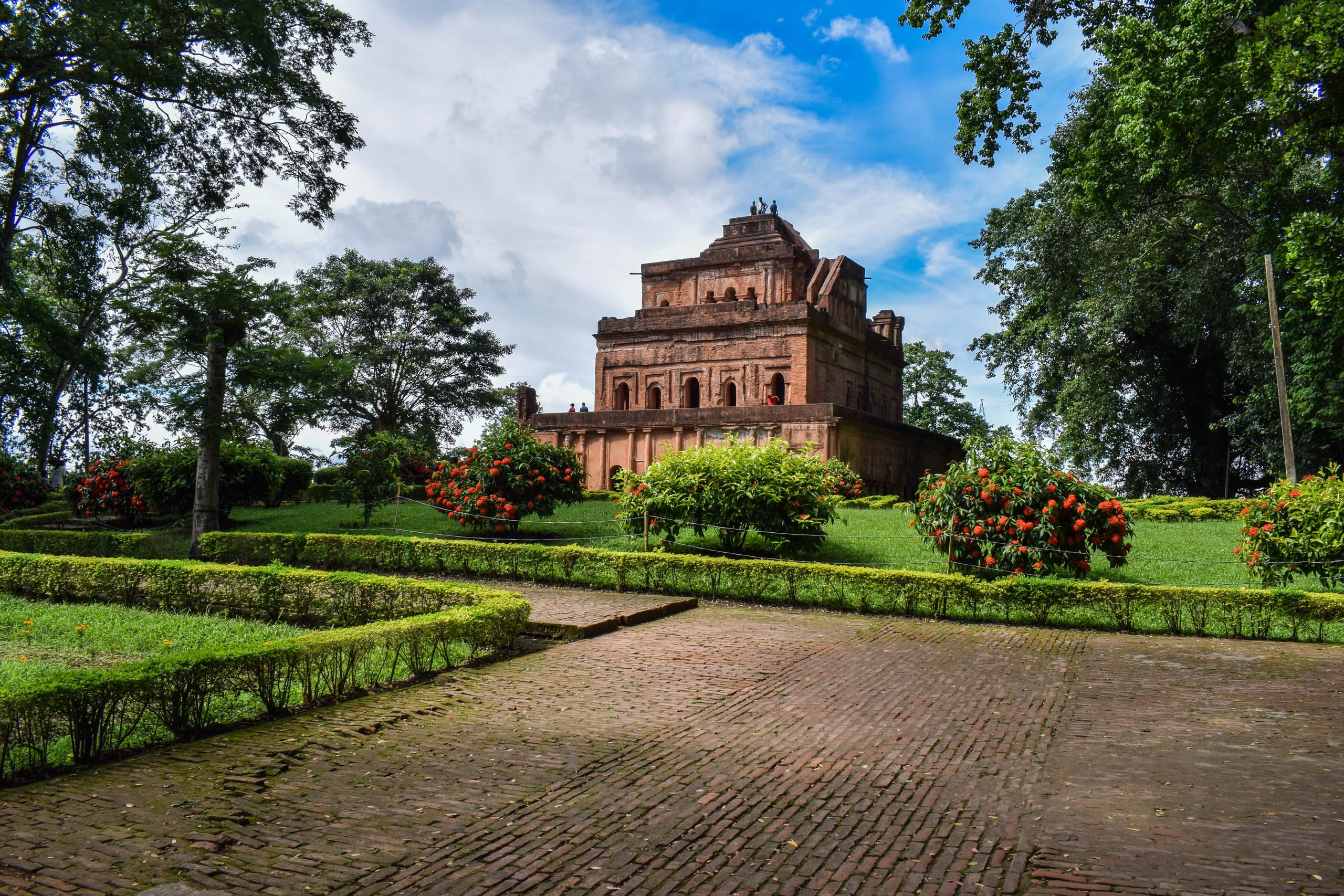
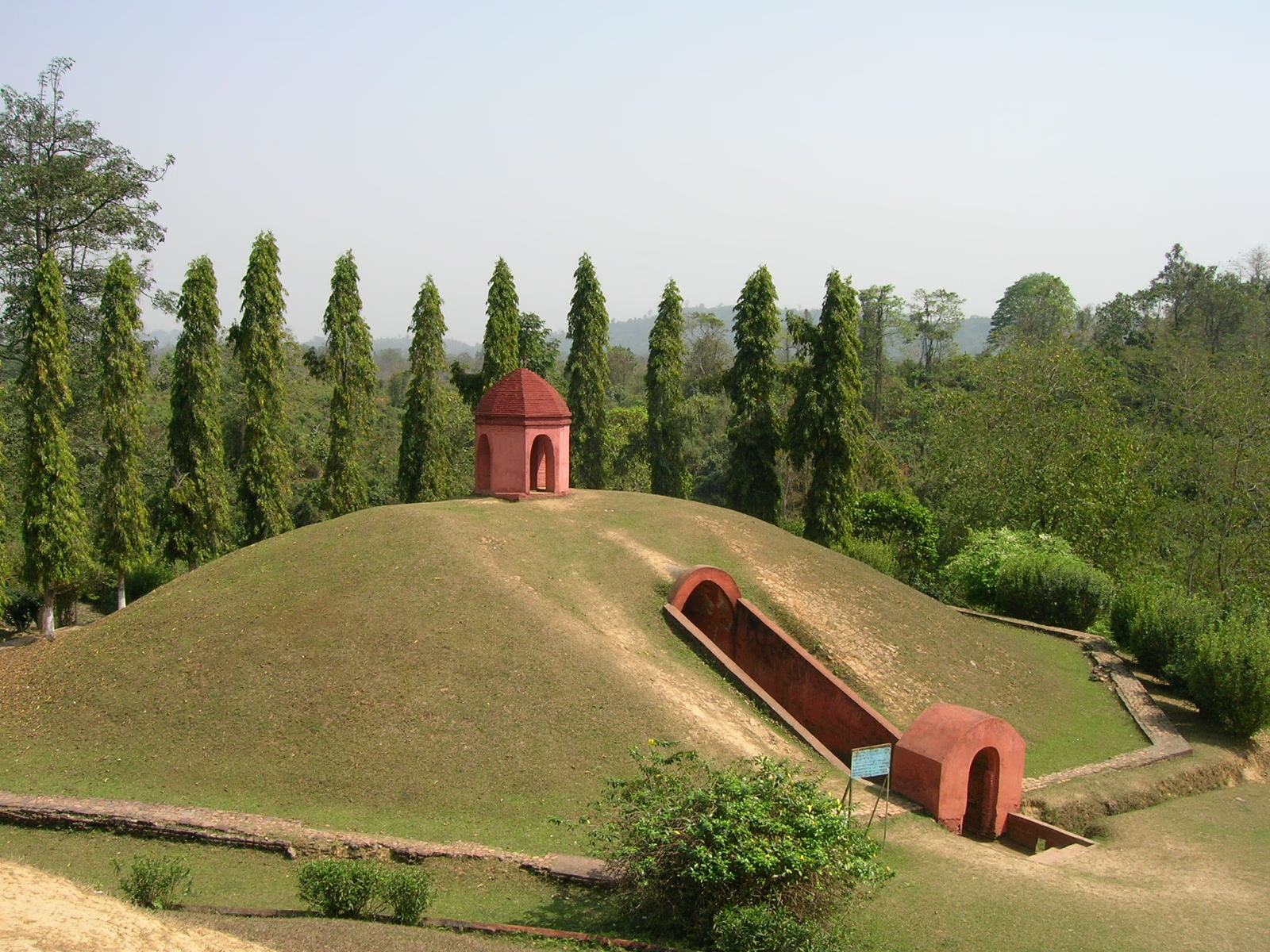
What the Ahoms did with the head is its own small window into who they were. They did not display it on the walls of a fort. By tradition they carried it back to Charaideo, the first capital and the sacred ground where the kings themselves were buried under their grass-grown maidams. There, the story goes, they buried the head of their enemy in the hill, together with that of another fallen Muslim commander. The killing-ground at the Bharali and the burial-ground at Charaideo were tied together in a single rite. It was the way the Ahoms tied everything back to the hill where their dynasty began.
To the Karatoya, and the powder that stayed
With Turbak dead and his army broken, the Ahoms drove the survivors westward. They did not stop at their own border. They pursued the retreat clear across the valley to the Karatoya, the river far to the west that the old kingdom of Kamarupa had long held as its frontier. To chase a beaten invader all the way to the Karatoya, and there to plant the boundary again, was to say something deliberate. The western limit of the country now reached as far as the great classical kingdom’s had reached, and the Ahom state stood as the heir to that line. The pursuit was both a victory and a claim.
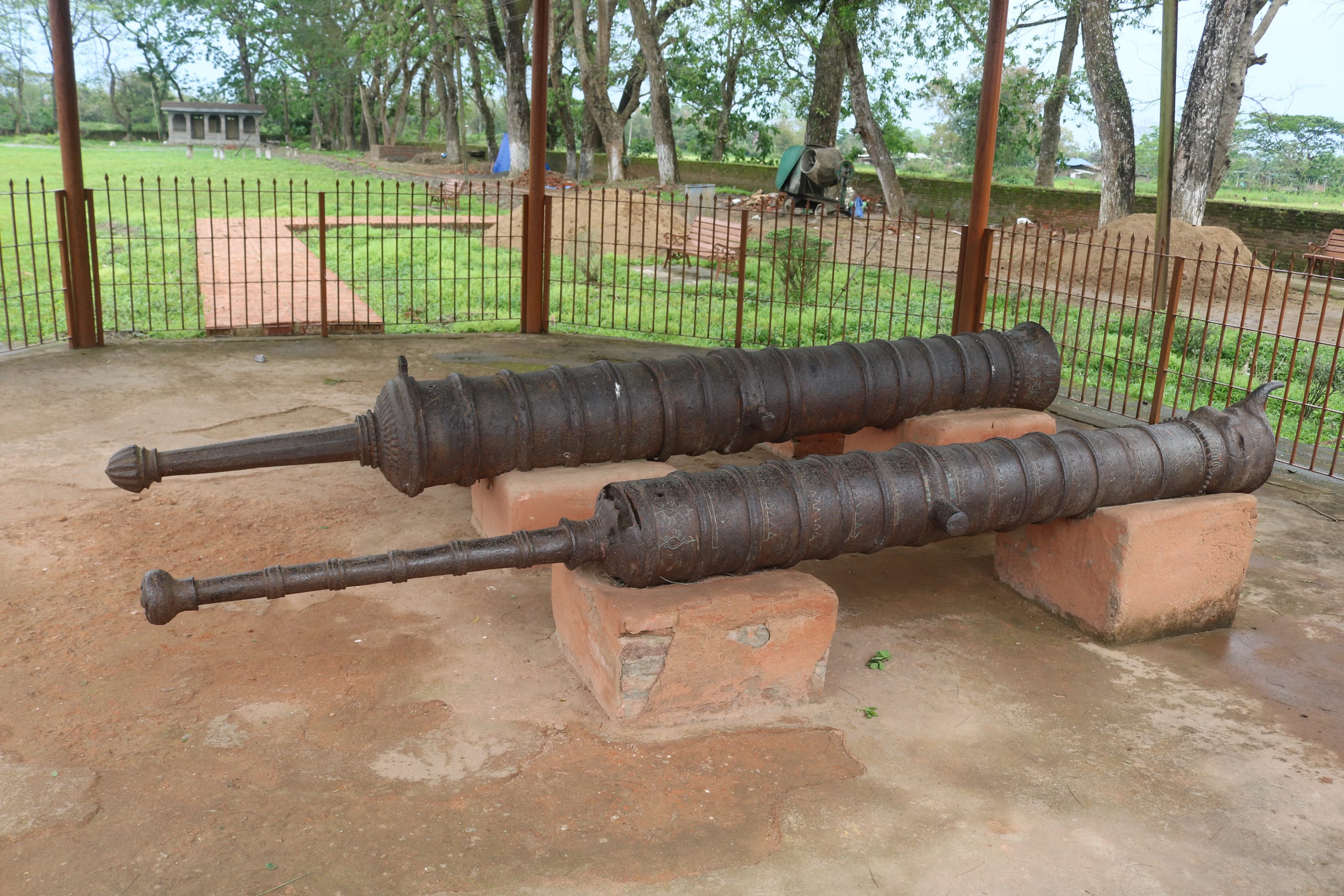
And the Ahoms came back from the Bharali carrying more than a head and a boundary. Off the wreck of Turbak’s army they took the spoils of a modern force: elephants, horses, and, above all, the guns, cannon and matchlocks both, that had so nearly destroyed them. The valley’s tradition has long credited this war with bringing firearms into Assam for the first time. The credit is broadly right, even if the truth is a little older. The Ahoms had brushed against powder a few years earlier, in the long war that won them the Chutia country. What is certain is that the Turbak war is the moment gunnery arrived in force. It was captured from the enemy who taught the lesson, and the Ahoms learned it. The kingdom that would one day hold the Mughals at Saraighat with its own cannon and its own gunners began to arm itself, in part, with what it stripped from the field where Mula Gabharu fell.
What the cloth was really for
It is easy to read the kavach kapor as a charm and leave it there, a piece of battlefield superstition that a sick woman happened to fail at. But the cloth was never only a charm. It was the form a whole society gave to the bond between the one who fought and the one who waited. The night’s labour, the spoken words, the thing worn against the skin into the place of dying, all of it was a way of sending part of the home into the war. Mula Gabharu believed the cloth had the power to save. When it failed, she did not decide the belief was foolish. She decided the debt was hers. The answer she gave was to stop waiting and go. She carried herself into the war the cloth could not be there to fight, and paid in the only coin she thought was left. The valley remembered the gesture longer than it remembered the battle. That is usually the sign that a people has recognised one of its own.