Kamalabari is one of the great sattras of Majuli, and the island's foremost centre of the arts. A celibate monastery of the neo-Vaishnavite tradition, it is renowned above all for Sattriya dance and for the training of bhakats in music and drama. It is known, too, for the cultural work of its offshoot, the Uttar Kamalabari Sattra, whose troupes have carried Sattriya from the namghar to the national and world stage without cutting it loose from the discipline that made it.
A sattra of the arts
The royal sattras of the Brahma-samhati are known for wealth and worldly weight. Kamalabari is known instead for discipline and art. Its founding is attributed by tradition to Badula Padma Ata, in the seventeenth century, one of the figures who shaped the Nika-samhati, the "pure" order that held the discipline of the faith at its strictest. That ancestry of strict observance is the root of the monastery's character, and it marks Kamalabari off sharply from the householder royal houses that stand nearby on the same island.
The four samhatis into which the movement divided were not merely administrative branches; they differed in how much of the world they let into the worship. Where the Brahma-samhati readmitted the image, the offering and the Brahmanical calendar, the Nika-samhati went the other way, paring the observance down and holding the celibate rule at its most exacting. To belong to it was to accept a life stripped of household ties and ordered wholly around the discipline of prayer and art. As a celibate establishment, Kamalabari's resident bhakats give their lives entirely to the monastery, and it is out of that severity, and not in spite of it, that its art has grown.
The rigour of that life has made it a nursery of the classical performing tradition that descends from Sankardev and Madhavdev. That tradition holds the Borgeet songs, the Sattriya dance with its codified repertoire and costume, and the bhaona drama. The Uttar Kamalabari Sattra, established from it, became one of the most important institutions in the modern recognition of Sattriya as a classical Indian dance.
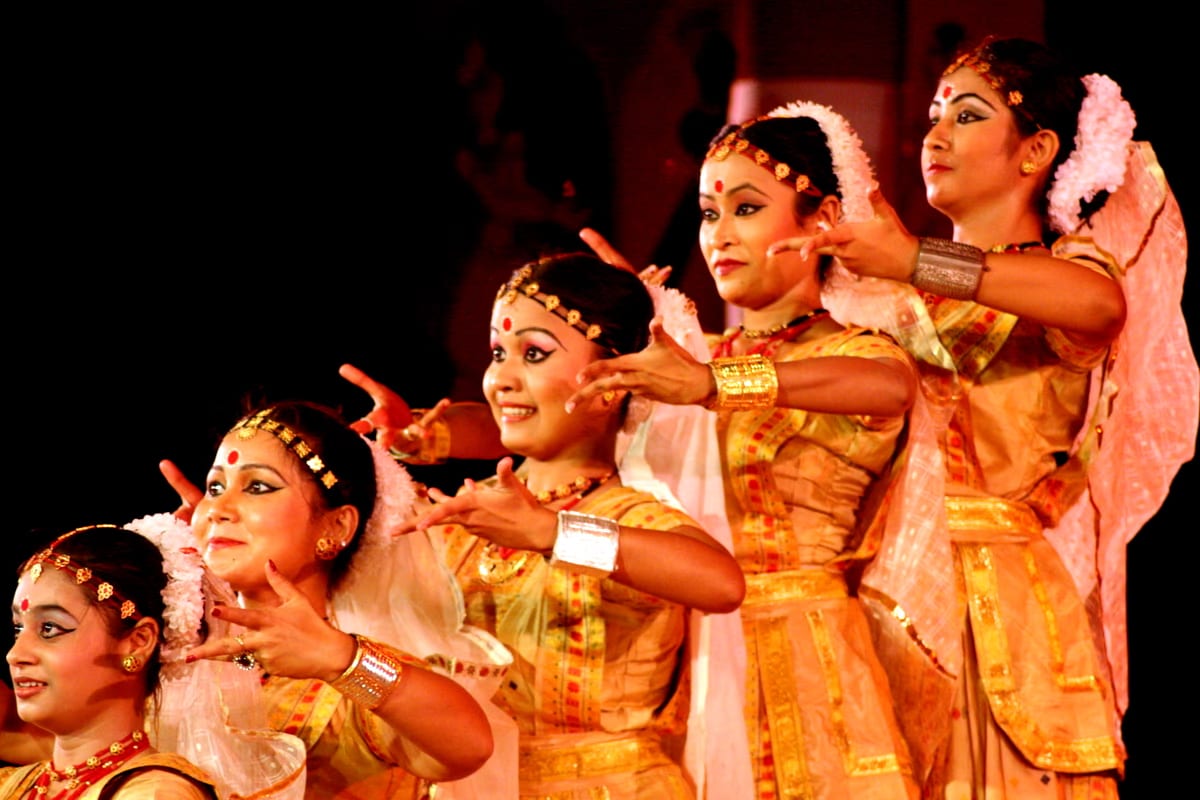
That recognition was a turning point in the life of the tradition, and it is worth marking where the discipline itself came from. The Nika-samhati rule that Kamalabari keeps descends not from the founder directly but from his foremost disciple, the keeper of the faith's song. It is fitting, then, that the songs and the codified dance the monastery guards were shaped above all by Madhavdev, that second voice of the movement, whose Borgeet and whose ordering of the worship gave the whole tradition much of its art.
The discipline of the bhakat
Life at a celibate sattra is ordered around the namghar and the daily round of prayer, recitation, instruction and the chanting of the divine name. Kamalabari belongs to the stricter, celibate stream of the movement rather than to the householder royal sattras, and its life shows it. Boys are given into the monastery young and raised within it, learning the scriptures, the Borgeet and the codified dance together as a single devotional formation. They do not come to the arts as a subject set apart; they learn them in the same breath as the prayer and the scripture, as facets of one life given to God.
An accomplished bhakat is therefore at once a monk, a scholar, a singer and a dancer, and the four are not felt as separate accomplishments. The dance is a form of worship, the song is a form of scripture, and the discipline that carries a boy from his first lessons to mastery is the same discipline that orders his day around the namghar. This unbroken transmission, master to disciple over the centuries, has kept the Majuli tradition alive as a living practice rather than a museum piece. It is what makes Kamalabari one of the most rewarding of the island's sattras for a visitor who wishes to understand the culture from the inside, for what is on view here is not a heritage preserved but a discipline still being lived.
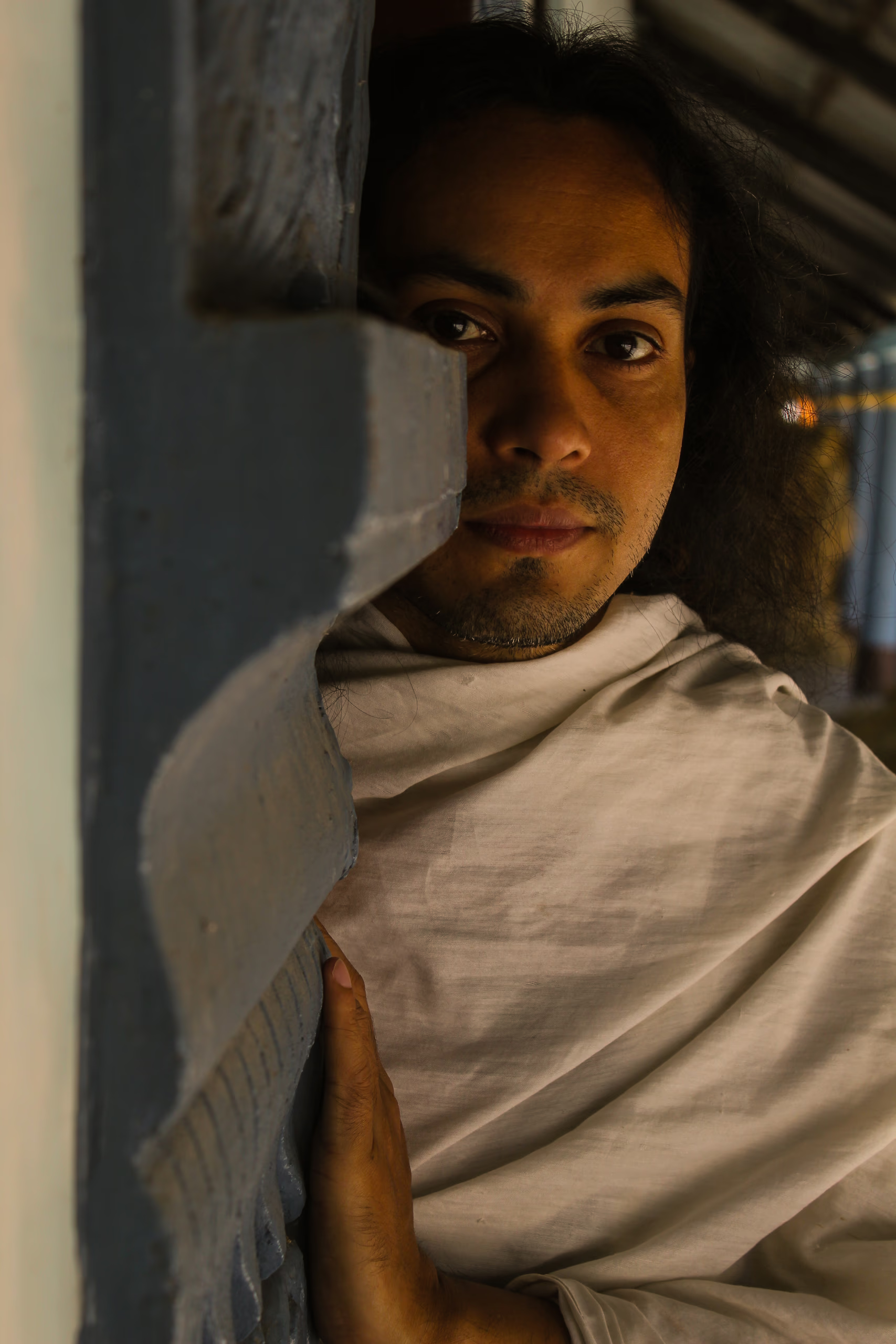
The cost of that formation is a whole life. A boy brought to the sattra small is raised away from household and marriage, in a brotherhood whose day is measured out in prayer and practice. What such a life yields, and what a visitor sees in a mature bhakat, is an art that has become second nature and a devotion that has become a discipline, the two no longer separable. It is a demanding inheritance, and that so many generations have taken it up is the reason the tradition survives at Kamalabari not as performance but as vocation.
From a garden to the world stage
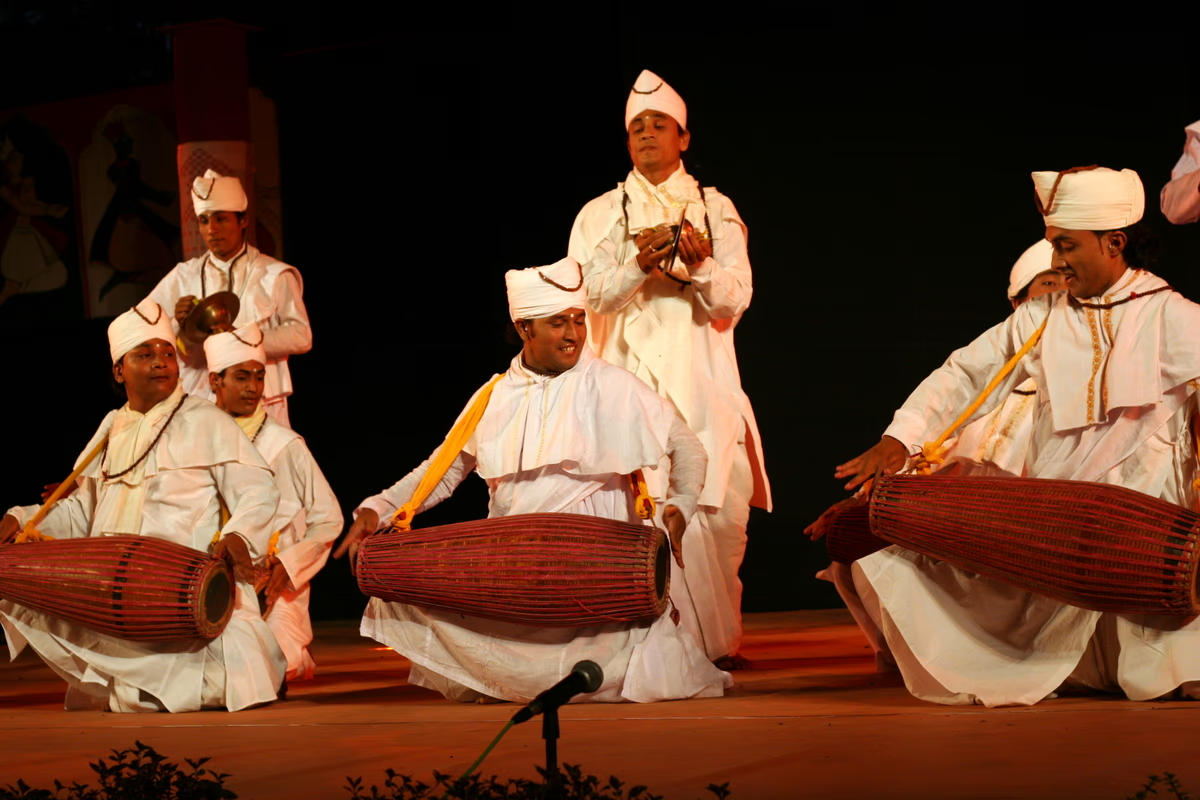
The sattra takes its name from the kamala, the orange, for the orchard said to have stood on its ground. But its fame travelled far beyond the island. For centuries the Sattriya dance had been a strictly cloistered art: the bhakats danced it in the namghar as an act of worship and never as public entertainment. In the later twentieth century the dancers of the Kamalabari sattras carried it out of the sanctum onto the concert stage, and in 2000 Sattriya was at last admitted to the small circle of India's classical dance forms beside Bharatanatyam and the rest.
The crucial thing is that it travelled as the sattra's own. It was taught and danced by monks who returned to the namghar between tours, so that the form on the concert platform and the form offered to the deity in the sanctum remained, against the odds, the same thing. It kept the gravity of a rite even when it was the most dazzling spectacle of the season. The same is true of the bhaona, the dance-drama opened by the sutradhar, the costumed narrator who sets the play in motion. What might so easily have become a folkloric display, loosened from its meaning for the sake of the stage, stayed instead a devotion that happened also to be watched.
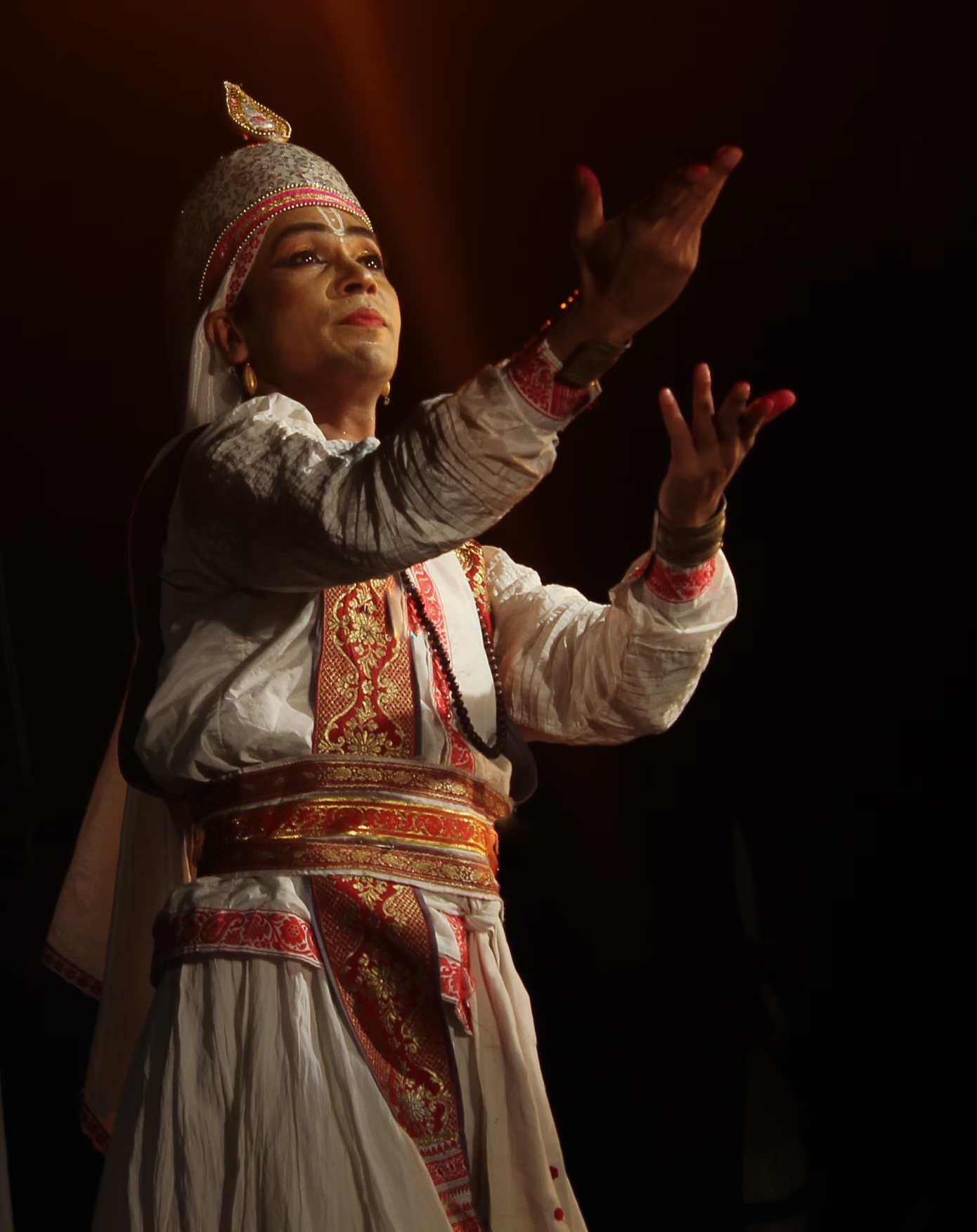
That passage from cloister to national stage was carried by named men, not by an institution alone. Maniram Dutta Muktiar was the great Kamalabari guru and dancer, remembered as the first recipient of the Sangeet Natak Akademi award for Sattriya, in 1963. His recital was among the form's first major appearances before a national audience, the moment the wider Indian dance world began to take the monastic art seriously. A generation on, his pupil Ghanakanta Bora became one of the most authoritative gurus of the form. Born on Majuli and brought to Kamalabari as a small boy, he was himself a Sangeet Natak Akademi awardee in 2001 and a Padma Shri in 2013, and his teaching and touring did much to fix Sattriya's place in the national repertoire.
It was through the disciplined work of such bhakat-dancers, rooted in an unbroken monastic practice, that a devotional dance of a remote river island entered the national repertoire, and it did so without being cut loose from the sattra that kept it. The lineage is the point: not a form rediscovered and staged by outsiders, but a living art carried outward by the very men raised inside it, and carried back home unchanged.
The making of a dancer-monk
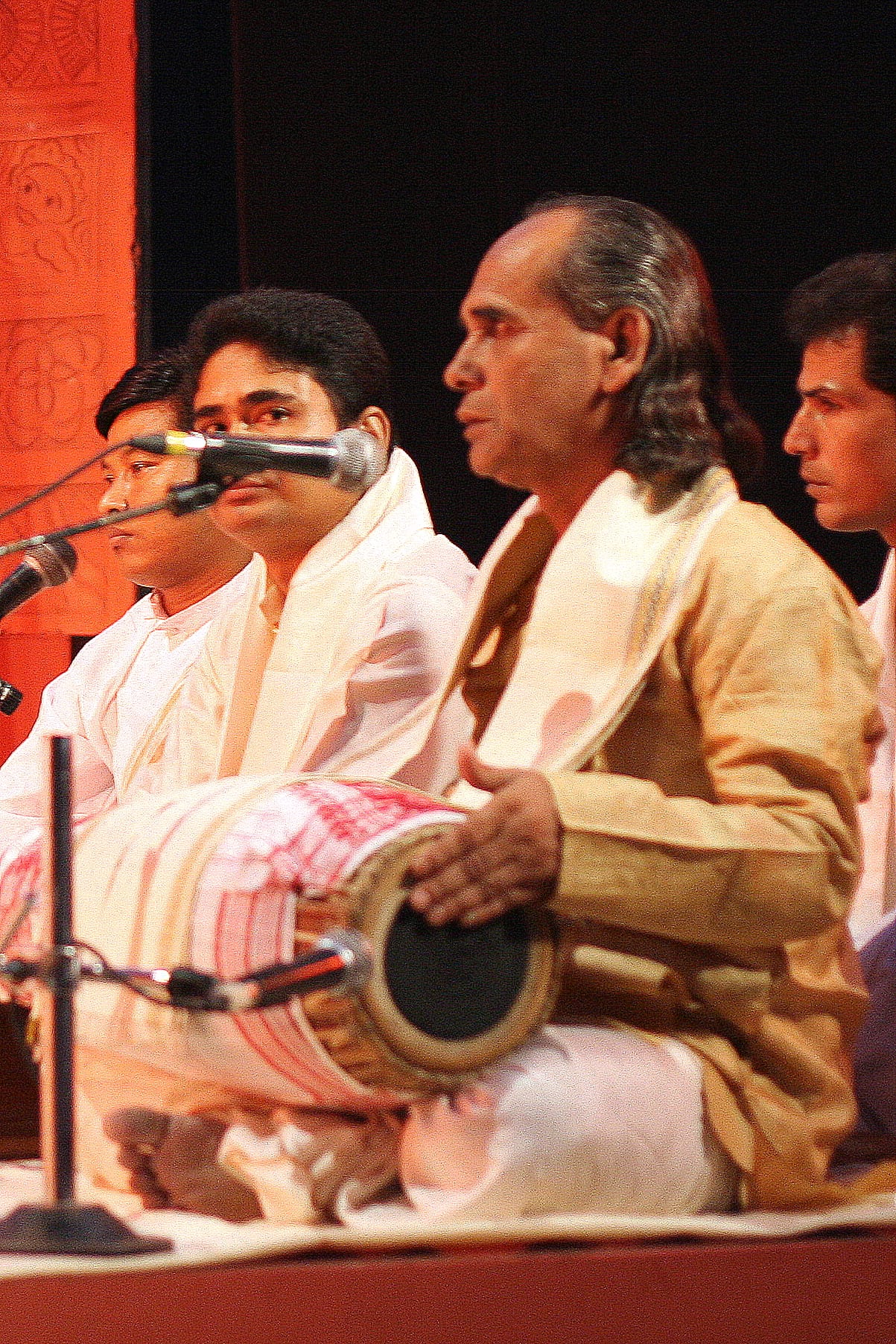
When the bhakats rehearse in the namghar, a visitor sees the end of that very long formation: the codified gestures, the footwork on the struck syllables of the drum, the carriage and the costume, all of it learned by years of repetition under a guru until it is second nature. The dancer who results is not a performer who happens to be devout. He is a monk for whom the dance is itself an act of worship, and that is the difference a visitor feels.
Many traditions that reach a national stage are pulled away from their source, thinned into spectacle as the audience grows. The Kamalabari lineage, from Maniram Dutta Muktiar to his successors, proved otherwise: a living devotion could be carried to the concert platform and brought home unspoiled. A visitor who watches a rehearsal is therefore seeing not a class but a devotion in progress, the discipline that has held the tradition intact across the centuries still being handed on, boy by boy, in the hall where it was always danced.
Visiting
Kamalabari lies on Majuli, reached by the ferry from Nimati Ghat near Jorhat and then the island road. A visitor who can time a stay to see the bhakats at their training, or a performance of Sattriya or bhaona, will see the living heart of the tradition. The sattra is an active monastery, entered with the observances proper to a place of worship. Make a circuit of the island's other sattras while you are there, pairing it with the royal Auniati Sattra, the Garamur Sattra, the Dakhinpat Sattra and the mask-making Samaguri Sattra, and the cool, dry months from November to March are by far the easiest time to make the crossing.