Samaguri is the sattra of the mask. One of the monasteries of Majuli, it has become famous across the world as the living centre of mukha-shilpa, the making of the expressive masks worn in the bhaona devotional drama, a craft it has kept alive and carried, in recent decades, far beyond the island.
A sattra known for its craft
Not every sattra of Majuli was a great royal foundation. Where Auniati and its fellow royal houses were raised by the Ahom crown, endowed with land and disciples and drawn into the affairs of the kingdom, the smaller sattras of the island lived by their worship and their work, and it is by its work that Samaguri is known. Its fame rests not on estates or regalia but on a single craft carried, hand to hand, down the generations of its bhakats: the making of the mukha, the mask of the bhaona.
Like the other monasteries of the island, Samaguri belongs to the world of sattras that Sankardev's reform brought into being, ordered around the namghar, the daily worship and the chanting of the divine name. What set it on its particular path was not a royal grant but the decision of its community to make the masks of the devotional theatre their special charge, and to keep making them, and teaching the making, when other houses let the skill lapse. That is an origin of a humbler and, in its way, a sturdier kind. A house endowed by a king depends on the king's favour; a house that lives by a craft depends only on its willingness to hand the craft on, and it is that willingness, unbroken across the generations, that has made Samaguri what it is. Its distinction is earned rather than granted, and it has outlasted the kingdom whose royal sattras it stands among.
The mukha and the bhaona
The masks of Majuli were made to serve the bhaona, the devotional theatre that Sankardev created to carry the stories of Krishna and the epics to ordinary people. In it, gods, demons and beasts appear in dance and dialogue, and the mukha gives those characters their faces, above all the demons and the great figures of the neo-Vaishnavite repertoire. The art of making them has been practised at Samaguri for generations: the craft of the bamboo and cane frame, the layered cloth and clay, and the painted and moving features.
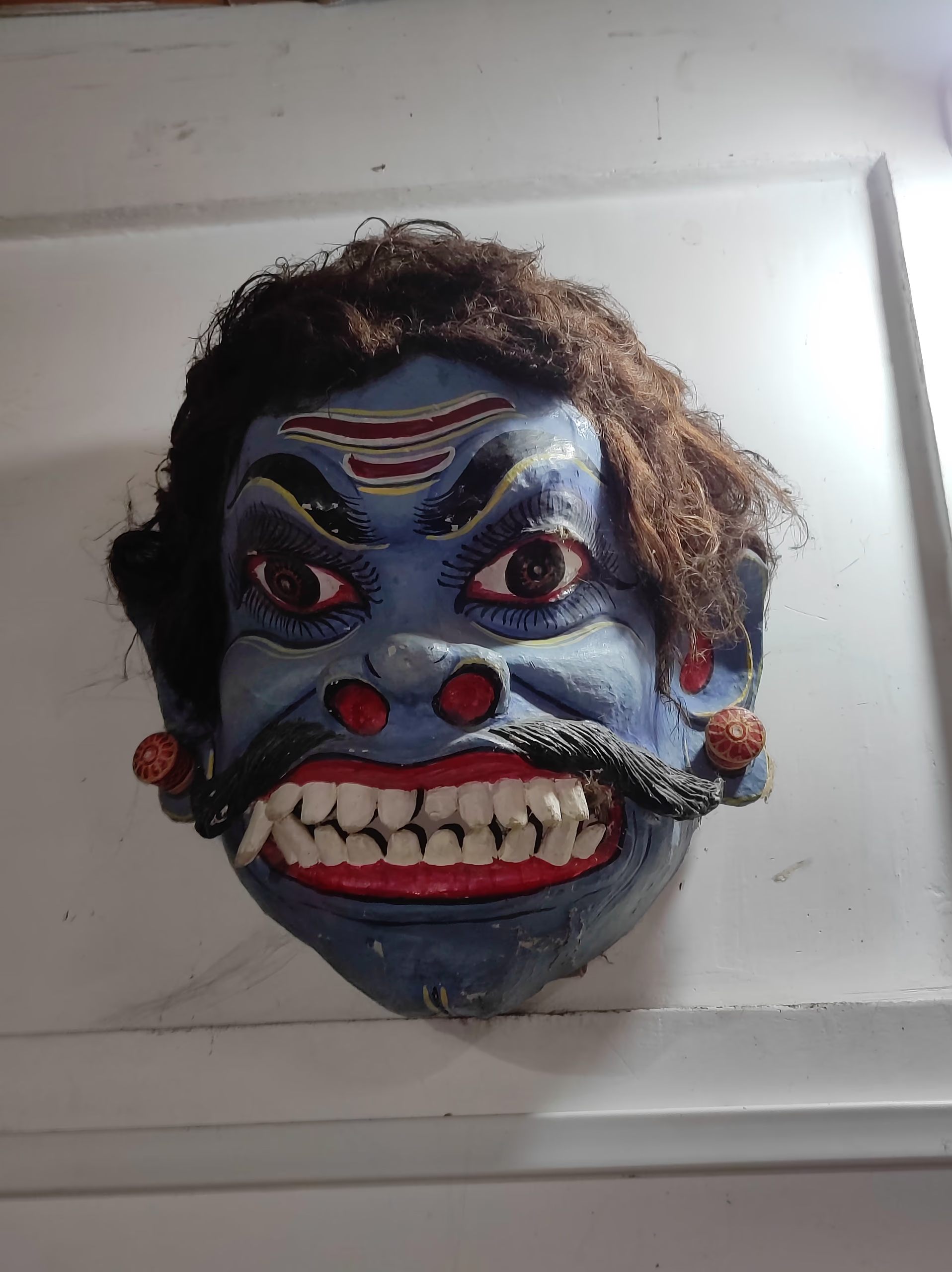
The making of a mukha is patient, layered work. The maker first builds an armature of split bamboo and cane, lashed into a lattice in the shape of the face or the whole head, and binds it. Over it he lays cloth soaked in a paste of clay and cow-dung, coat on coat, drying each before the next, until the features stand out. The surface is then smoothed, and the eyes and teeth and ornaments are modelled. The whole is painted in strong mineral colours that let a character read across a torchlit courtyard: hengul, the red of vermilion, and haital, the yellow of arsenic, with white from clay and black from lamp soot. Jute serves for hair, and light sholapith keeps the weight bearable through a night-long play.
The masks were never meant to be looked at in stillness. They belong to the bhaona, where a single actor, his own face hidden, becomes the demon Ravana or the bird Garuda or the boar-headed god. The mask must be light enough to wear through a night-long play and fierce enough to carry the part. To make one is itself a devotional act, a craft kept within the sattra as part of its worship, and not a trade practised for its own sake. It was Sankardev who created the bhaona the masks serve, and from his teaching grew the whole neo-Vaishnavite culture of which this craft is a part; so that a mask made at Samaguri, for all its ferocity of face, is finally an instrument of the same devotion that fills the namghar.
The kinds of mask
The masks are not all of one size or kind. Samaguri's makers sort them by how much of the body they cover, from a simple face to a towering whole-body construction.
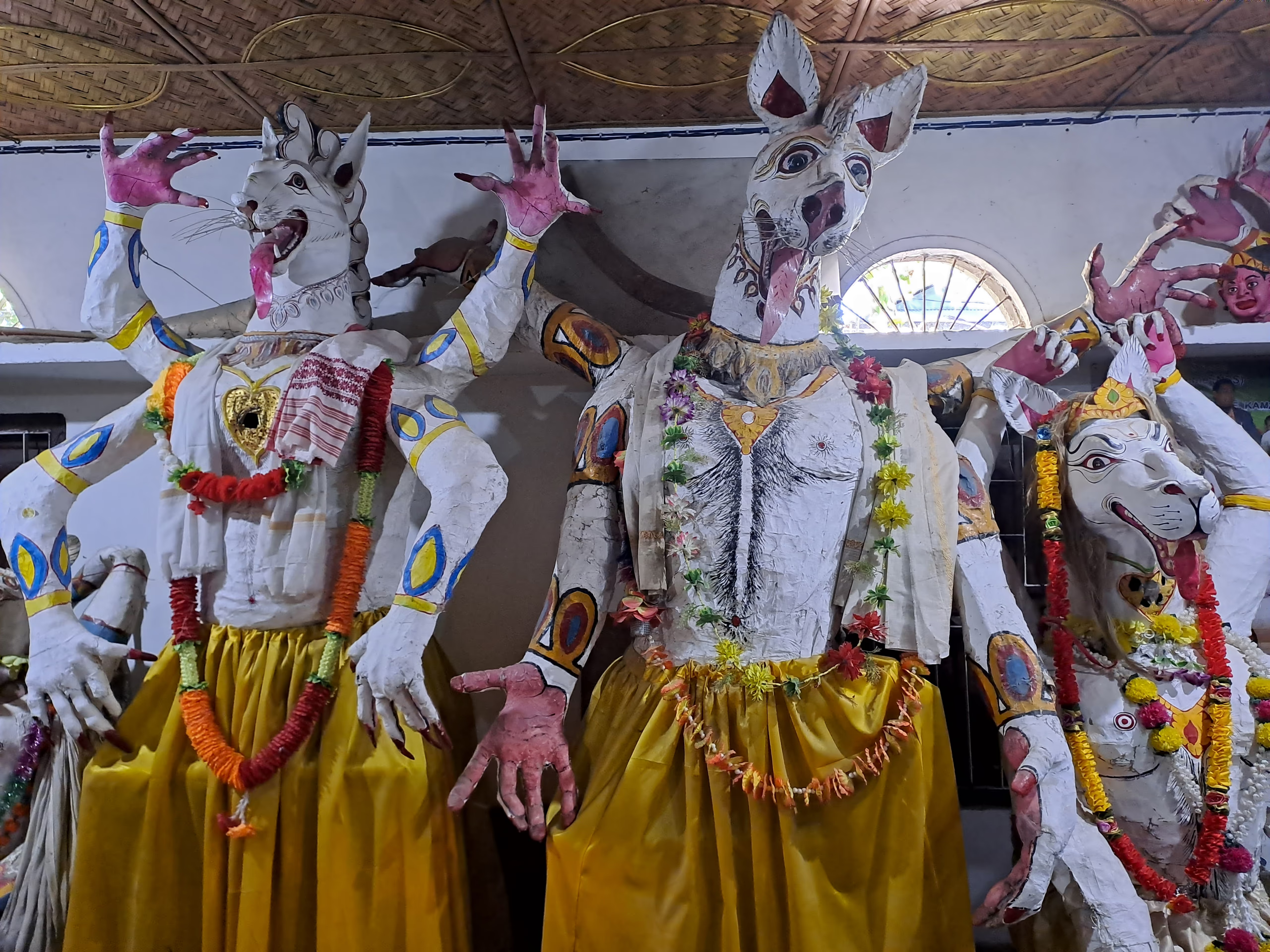
The simplest is the mukh-mukha, the face-mask that hides only the features. Larger is the lotokori mukha, the head-mask that encloses the whole head. Largest of all are the great cho-mukha, the body-masks: towering constructions that swallow the actor from crown to waist and turn him into a giant demon or a beast, built on a bamboo frame light enough that the wearer can still move and see. The most celebrated of the modern innovations are the articulated masks, whose eyes, jaws and limbs move by hidden strings and levers, so that a Ravana can roll his eyes, or a Garuda open its beak, in the middle of a play.
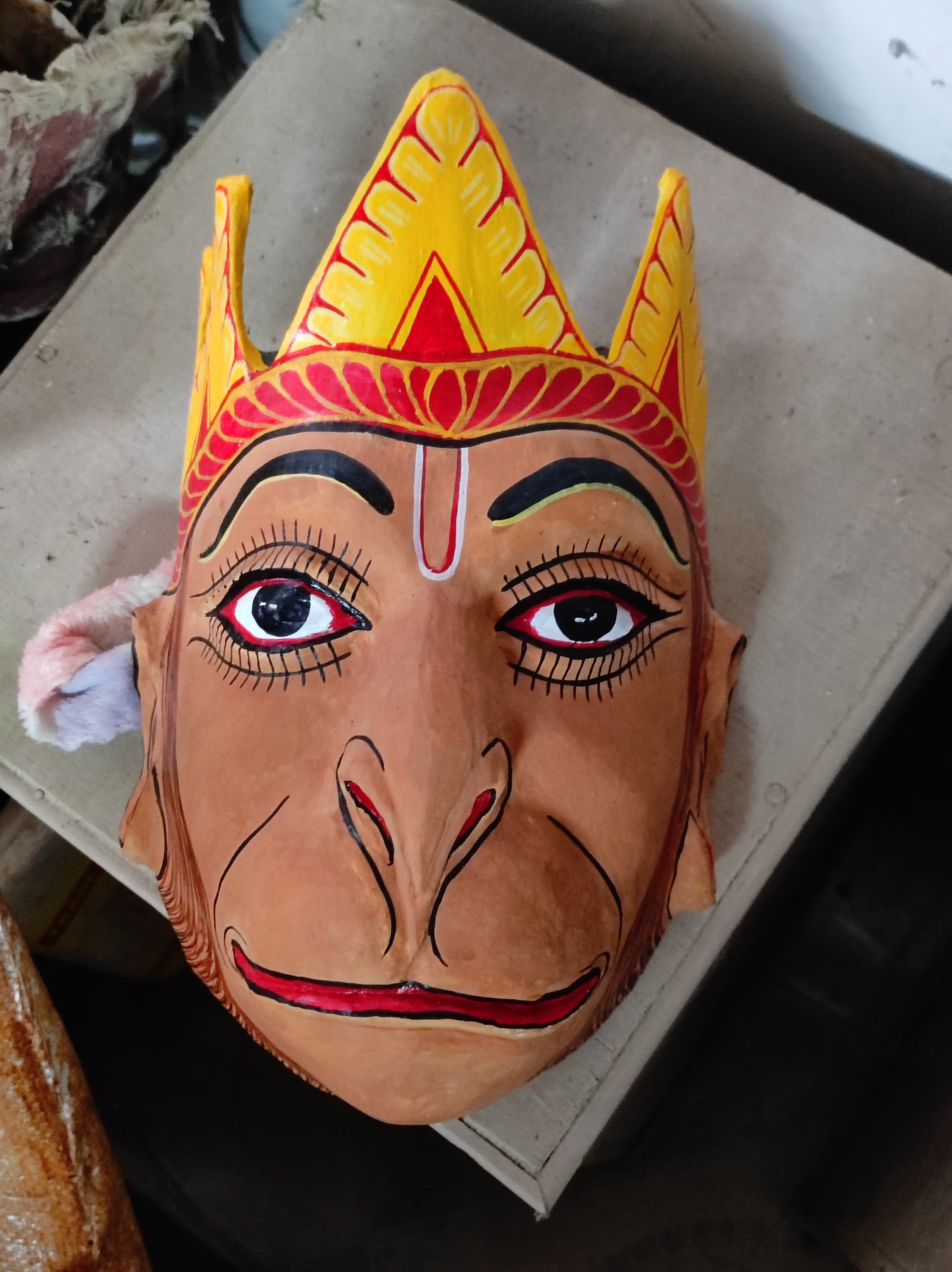
The repertoire is the cast of the bhaonas themselves, and the makers are known for particular characters. There is the ten-headed Ravana of the Ramayana plays, built as a single towering crown of faces; the lion-headed Narasimha and the demon Hiranyakashipu he tears apart; the bird Garuda and the monkey Hanuman; the child-killing ogress Putana whom the infant Krishna destroys. Each is built to a character, and the maker must know the bhaona as well as the craft, for the mask is a costume for a role and not a sculpture. It is judged finally by how it lives under torchlight in the hands of a dancing actor.
A craft renewed
The satradhikars of recent generations have carried the masks out of the namghar and into the wider world. Above all this is the work of the line of mask-making Goswamis who have led Samaguri, and the masks are now exhibited and collected internationally, sought by museums and festivals far beyond Assam. The keeper of the craft in our own time is Hemchandra Goswami, born on Majuli in 1958, who learned to build masks at the age of ten by watching his father Rudrakanta Deva Goswami at the bench. He has guarded the devotional method while carrying it further than it had gone, so that the old devotional craft has become also a celebrated theatrical art.
That widening has brought its own labour. The workshop has taken on students from outside its own walls, to keep the skill from dying with its masters, for a craft held by a single family in a single sattra is only ever one broken generation from loss. Teaching it outward is thus not a departure from the tradition but its insurance. The recognition has followed: the Sangeet Natak Akademi Award and, in 2023, the Padma Shri. In 2024 the mukha-shilpa of Majuli won a Geographical Indication tag, alongside the island's manuscript painting, a formal recognition of the craft as the island's own.
The masks themselves have travelled abroad. In 2016 the British Museum in London staged the exhibition Krishna in the Garden of Assam, built around the great Vrindavani Vastra textile of the tradition, in which Assamese dance masks of this kind were shown. The work draws to Majuli visitors who come as much for the masks as for the monasteries, and of all the island's sattras this makes Samaguri the one whose fame has travelled furthest. There is a quiet irony in it: the house that was never a great royal foundation, that lived by its craft rather than by a king's grant, is the one whose name is now known in London and beyond, while the kingdom that endowed its grander neighbours is three centuries gone.
Visiting
Samaguri lies on Majuli, reached by the ferry from Nimati Ghat near Jorhat and then the island road. The mask-makers' workshop is among the most absorbing things to see on the island, with masks often on view at every stage of making, from the bare bamboo lattice to the finished, painted face. It is an active sattra, entered with the observances proper to a place of worship. The most extraordinary time to come is the autumn Raas, when the masks are worn in performance and the whole island fills with bhaonas; pair the visit with the island's royal sattras, Auniati, Dakhinpat and Garamur, and the dance-house of Kamalabari. Like all of Majuli's monasteries, Samaguri lives under the long shadow of the island's erosion, the Brahmaputra steadily eating the land that carries the sattras, and this gives the carrying of the craft beyond the island a second meaning: it is, in part, an insurance against the day the river takes the place that made it.